
Your Smart TV Is Watching You: How Everyday Devices Turn Your Home Into a Surveillance Hub
TECHNOLOGY
Debbie Edwards
4/4/20264 min read
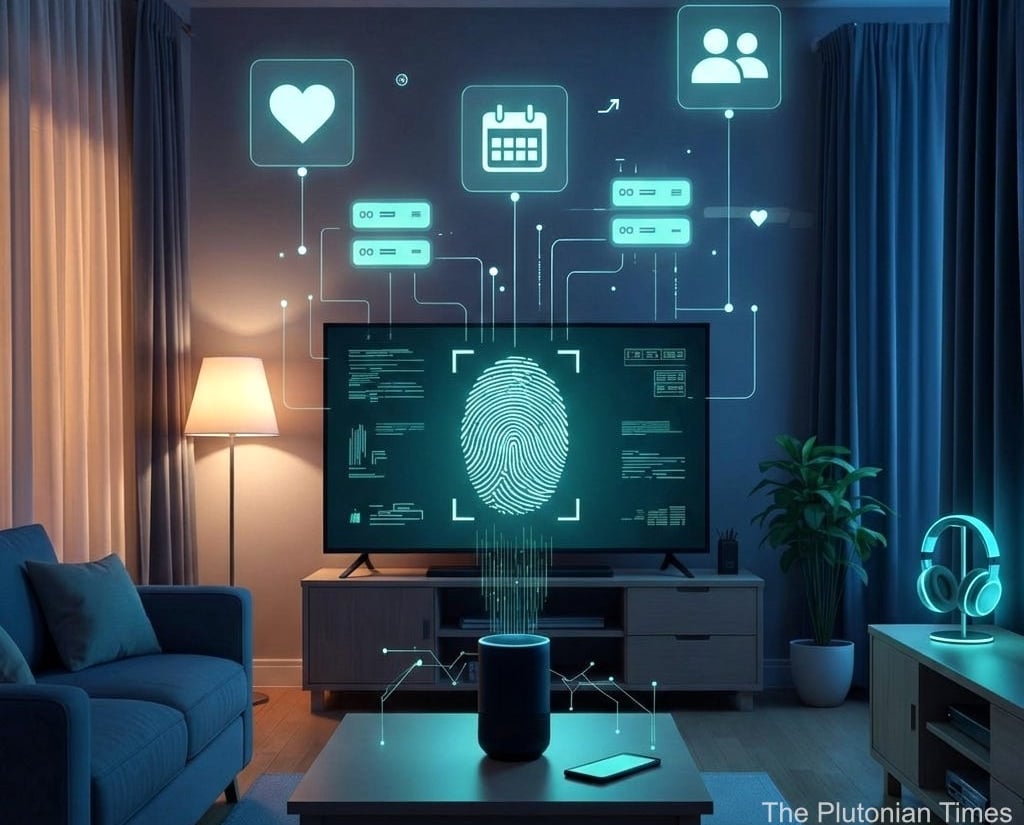
Your living room, bedroom, and daily routines have become rich, continuous data sources. Smart TVs, voice assistants, smartphones, IoT sensors, and connected apps operate as always-on observers. They do not just log what you watch or say. They combine telemetry such as app usage, network scans, device interactions, timestamps, and inferred behaviors into detailed behavioral profiles.
Automatic Content Recognition (ACR) on smart TVs is particularly invasive. It captures screenshots or audio fingerprints of everything on screen, including streaming services, cable TV, HDMI inputs from laptops or gaming consoles, personal photos, YouTube videos, or security camera feeds. This happens at high frequencies, sometimes multiple times per minute or even every 500 milliseconds in some cases. The data, along with voice commands, app opens, and network environment details, gets sent to manufacturers and their partners.
Inferences from this data reveal highly sensitive personal details:
Political views: Watching specific news channels (for example, Fox News versus CNN), political documentaries, or election coverage allows segmentation into audience profiles. ACR data helps advertisers target based on inferred ideology, race, or language preferences.
Health: Queries to Alexa or Google Home about symptoms, viewing of medical shows, or ads for treatments create health dossiers. Combined with viewing patterns, this enables micro-targeted pharmaceutical ads or inferences about conditions such as mental health from content choices.
Relationships and daily schedules: Voice interactions capture conversations or background audio. Timestamps of TV or app use reveal when people are home, asleep, or alone. Network data shows device handoffs (for example, from phone to TV), while ACR logs binge sessions or family viewing. Smart home devices such as thermostats or lights add presence and movement patterns.
Broader profiling: Manufacturers like Samsung promise advertisers vast profiles linking viewing to demographics, purchasing, and offline behaviors. ACR builds individual-level dossiers usable for manipulative ads, including political or health-related targeting.
This is not hypothetical. Research and reports confirm that ACR combined with identity technologies creates extensive, highly granular, and intimate tracking, even when the TV serves as a monitor for other devices.
Sensorveillance turns everyday devices into ambient evidence for law enforcement or intelligence. IoT sensors in TVs, speakers, cameras, plugs, and other gadgets generate passive data trails that reconstruct life inside the home without traditional surveillance methods. Devices become digital informants by default. Your Samsung Smart TV, Amazon Echo, or Google Nest can supply warrants for viewing history, voice logs, or usage patterns.
Real-world cases illustrate this:
Smart TVs have been used as evidence. Federal agents have obtained warrants for Samsung Smart TV data, including viewing activity, in investigations.
Voice assistants: Amazon Echo audio was sought in murder investigations, such as the 2015 Arkansas hot tub death case and later Florida cases. Prosecutors argued it may have captured relevant incidents. Similar requests have targeted Google Nest cameras.
Reconstructing spatial privacy: Smart home data reveals intimate routines, such as bath times via smart lights or thermostats, conversations via always-listening microphones, and exact device locations via Wi-Fi or network telemetry. In the home, all details can be considered intimate details. Law enforcement accesses this via warrants, subpoenas, or partnerships (for example, with Ring cameras).
This creates ambient evidence. No active spying is needed. The data already exists and can be reconstructed for timelines, presence, or behavioral patterns in investigations.
Downstream risks amplify the intrusion:
Targeted ads that feel invasive: ACR data fuels hyper-personalized ads, including political, pharmaceutical, or manipulative ones. Advertisers retarget across devices (a TV ad can lead to a phone ad within minutes). The industry invests billions in smart TV ads because of this granularity.
Data breaches: High-profile incidents expose intimate footage. Amazon Ring faced FTC scrutiny after employees or contractors viewed private videos, including from bedrooms or bathrooms. Hackers have accessed thousands of accounts and used two-way audio to harass users, including children. Alexa has stored children’s voice and location data improperly. Similar vulnerabilities affect smart TVs and other IoT devices.
Foreign access: Chinese manufacturers such as TCL and Hisense operate under China’s National Intelligence Law and Data Security Law, which require cooperation with state intelligence. Policies allow data transfers or storage in China, or maintenance access from there, even if primary servers are in the United States. Texas pursued legal action against Hisense, TCL, and others over ACR practices and potential CCP access, securing temporary restraining orders in some cases. DHS has raised concerns about certain devices.
Government purchases bypassing probable cause: Agencies such as the FBI, DHS, ICE, or DoD buy commercial data (location, browsing, inferences) from brokers. No warrant is needed in many cases. This approach skirts some legal precedents for location data established in cases like Carpenter v. United States. Bulk purchases create dossiers on millions without traditional judicial oversight, using the same telemetry ecosystems.
References:
ACM Internet Measurement Conference (IMC) 2024 - “Watching TV with the Second-Party: A First Look at Automatic Content Recognition Tracking in Smart TVs” (UCL, UC Davis, Universidad Carlos III de Madrid) – Detailed black-box audit of ACR on Samsung and LG TVs, showing it tracks content even via HDMI/external devices.
UC Davis News / UCL Study (2024) - Research confirming ACR captures screen content (including personal photos, YouTube, security feeds) and shares with manufacturers for profiling and advertising.
Center for Digital Democracy Report (2024) - Analysis of commercial surveillance via smart TVs, highlighting granular tracking for political, health, and manipulative advertising.
Stanford Law Review (2020) - “Searching the Smart Home” by G. Bronshteyn: Explores IoT devices (including smart TVs, Echo, Ring) as ambient evidence for law enforcement, with case examples like Amazon Echo in murder investigations and Samsung Smart TV warrants.
FTC Settlements (2023) - Charges against Amazon for Ring (employee/contractor access to private videos, hacker vulnerabilities) and Alexa (retaining children’s voice data despite deletion requests).
Texas Attorney General Lawsuits (2025) - Suits against Samsung, LG, Sony, Hisense, and TCL over ACR data collection; temporary restraining order against Hisense citing China’s National Intelligence Law and potential CCP access.
Carpenter v. United States (Supreme Court, 2018) - Landmark ruling requiring warrants for extended cell-site location data; widely discussed in analyses of government bulk purchases of commercial data to bypass similar protections.
Berkeley Technology Law Journal (2016) - “Chilling Effects: Online Surveillance and Wikipedia Use” by Jonathon Penney: Empirical study showing ~30% drop in views of sensitive topics after Snowden NSA revelations, with lasting effects.
These represent peer-reviewed studies, government actions, court cases, and official reports that ground the technical, legal, and societal implications. Many focus on ACR’s invasiveness, real-world law enforcement use of home device data, privacy violations, and self-censorship from perceived surveillance.