
The French Law That’s Feeding Millions While Saving the Planet
ENVIRONMENT
Debbie Edwards
4/29/20262 min read
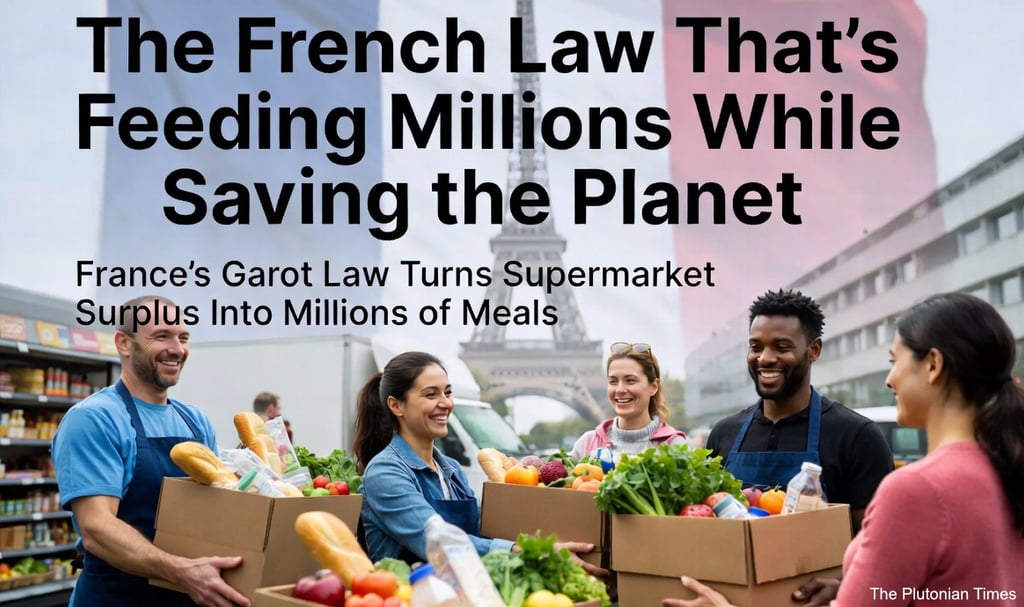
France became the first country in the world to require large grocery stores to donate unsold edible food instead of throwing it away. The Garot Law, passed unanimously in February 2016, applies to all supermarkets and grocery outlets larger than 400 square meters (about 4,305 square feet).
The law does two main things: it bans supermarkets from destroying or spoiling food that is still safe to eat, and it requires them to sign formal agreements with approved charities and food banks to donate the surplus. Non-compliance can result in fines. Stores must prioritize donation to people, followed by animal feed, composting, or energy recovery only as last options.
Major chains like Carrefour formalized partnerships with networks such as Banques Alimentaires. Food banks now receive fresher and more consistent supplies of meat, produce, dairy, and ready-to-eat items. As of 2026, supermarkets rescue around 46,000 tons of food annually from large stores alone. This supports approximately 226 million meals per year. Compliance stands at 96% among eligible retailers, with donations to food banks rising by 20-30% in the years following implementation.
The policy has delivered clear benefits. It reduces methane emissions from landfills, conserves resources used in food production, and helps stores cut disposal costs while improving their public image. Broader national food waste showed modest declines in retail and distribution, though overall figures (around 9.45 million tons in recent data) highlight that households remain the largest source. The law supports France’s ongoing target of 50% reduction in retail and collective catering waste by 2025 (versus 2015 levels), with further goals extending to 2030 across the supply chain.
The law initially covered only large retailers. The 2020 Anti-Waste and Circular Economy Law (AGEC) later extended similar obligations to major food producers and catering operations. Advocates note room for stronger enforcement and higher donation minimums, but the policy has already shifted culture toward greater awareness and prevention.
France’s approach has inspired similar measures in Italy and discussions in other countries. By turning legal obligation into practical action, the Garot Law shows how governments can effectively fight both food waste and hunger at the same time.
References
The Guardian (2016)
PBS NewsHour (2019)
Recent 2025-2026 reports and social summaries citing Banques Alimentaires data
OECD and French government evaluations (2023-2026)