
Tesla, Pentagon, and Ecological Fragility at Stake: The Secret Lithium Discovery of the Appalachians
TECHNOLOGYENVIRONMENT
Debbie Edwards
5/7/20262 min read
My post content
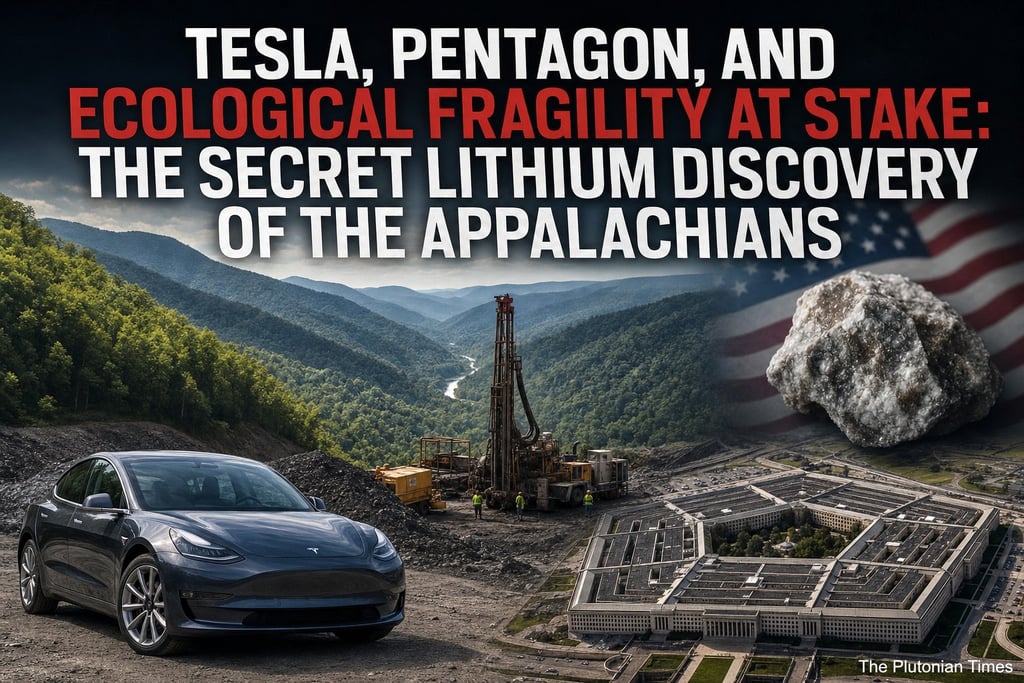
In late April 2026, the U.S. Geological Survey (USGS) announced major lithium discoveries in the Appalachian region, estimating 2.3 million metric tons of economically recoverable lithium oxide. This resource could replace 328 years of U.S. lithium imports based on 2025 consumption levels. The deposits lie primarily in pegmatite rocks, with about 1.43 million metric tons in the southern Appalachians (mainly the Carolinas) and 900,000 metric tons in the northern Appalachians (focused in western Maine, New Hampshire, and parts of Vermont).
These findings position the eastern U.S. as a potential domestic source for lithium used in electric vehicle batteries, grid storage, and electronics.
Mapping the Deposits and Ongoing Projects
Two companies lead development efforts and are positioned to dominate Appalachian lithium production.
Albemarle Corporation is restarting the Kings Mountain Lithium Mine in Cleveland County, North Carolina. Idled since the early 1990s, the site received federal permitting in March 2026 and has been dewatered. Plans call for annual production of approximately 420,000 metric tons of lithium-bearing spodumene concentrate, with operations potentially resuming in late 2026.
Piedmont Lithium is advancing the Carolina Lithium Project in Gaston County, North Carolina. The company has secured a state mining permit and is progressing county and air quality approvals for a fully integrated operation to produce lithium hydroxide for North American EV and battery markets.
Pending Contracts and Development Momentum
Government support is accelerating these projects. Albemarle secured a $90 million Department of Defense agreement under the Defense Production Act to purchase lithium from Kings Mountain for national security needs. The company also received over $200 million in Department of Energy grants for processing facilities and workforce training.
Piedmont Lithium holds offtake agreements with major EV manufacturers, including Tesla, for spodumene concentrate. These contracts give Albemarle and Piedmont strong commercial positions as automakers seek secure U.S.-sourced lithium.
Environmental Implications
Hard-rock mining raises concerns over land disturbance, water use, tailings, and impacts on Appalachian forests and watersheds. Waste from these pegmatite deposits tends to be alkaline, potentially lowering acid mine drainage risks compared to other operations. Proponents argue domestic production reduces reliance on overseas sources with weaker regulations. Critics highlight local issues such as truck traffic, dust, noise, and reclamation needs. Responsible practices like solar integration and strong reclamation bonds will be essential.
Projected Impacts
Full development could supply batteries for 130 million electric vehicles, 1.6 million grid-scale storage systems, or billions of consumer devices. The projects promise jobs, tax revenue, and supply chain growth in Appalachian communities. Strategically, they reduce U.S. dependence on Australia and China-dominated imports.
Challenges include volatile lithium prices, permitting timelines, and community acceptance, especially in environmentally sensitive northern areas.
Looking Ahead
Albemarle and Piedmont Lithium are currently best positioned to control much of the early Appalachian lithium development. Success will depend on balancing rapid production with environmental stewardship and community support. These deposits offer a significant opportunity for U.S. mineral independence and a cleaner energy future.
References
U.S. Geological Survey. (April 28, 2026). Lithium in Eastern States Could Replace Imports for a Century or More.
Wintzer et al. (2026). Quantitative Mineral Resource Assessment of Lithium Pegmatite Deposits in the Northern Appalachian Orogen.
Albemarle Corporation and Piedmont Lithium project updates (2025-2026).
News coverage from major outlets on regional developments.