
Project Paperclip’s Dark Legacy: How Nazi Scientists Helped the CIA Poison American Veterans
DISCLOSURES
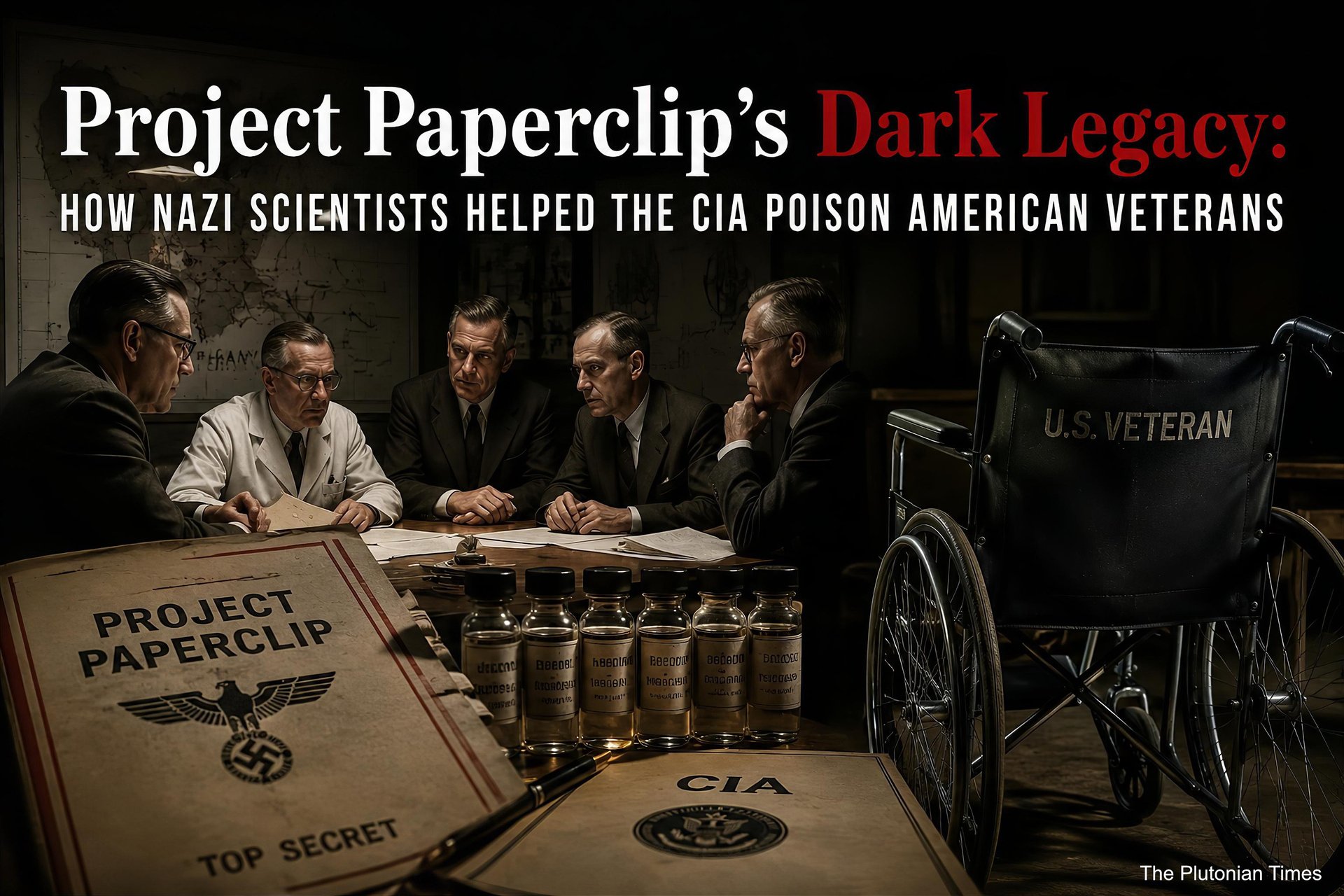
During the Cold War, the United States military and intelligence agencies conducted extensive chemical and biological testing on service members. Many participants later suffered health consequences and sought accountability. One key legal effort to address these issues came through the class action case Vietnam Veterans of America et al. v. CIA et al., filed in 2009.
Background on the Experiments
The lawsuit focused on secret programs that exposed thousands of U.S. soldiers to dangerous substances, primarily at facilities such as Edgewood Arsenal in Maryland. Soldiers were given a wide range of chemicals and biological agents. These included nerve agents like sarin, VX, tabun, and soman; incapacitating agents such as BZ (3-quinuclidinyl benzilate); hallucinogens including LSD, mescaline, PCP, and THC analogs (sometimes called “red oil”); blistering and mustard agents; barbiturates and amphetamines; riot control agents like CS gas; and biological substances such as anthrax, plague, tularemia, and Q fever. In total, defendants administered at least 250 and as many as 400 chemical and biological agents.
Many participants believed they were testing new equipment or volunteering for routine studies. Instead, they became subjects in experiments aimed at developing incapacitating agents, truth serums, and chemical weapons countermeasures. Aspects of these programs benefited from Project Paperclip, which brought Nazi scientists to the United States after World War II to assist with research on psychochemicals and related areas.
The experiments spanned roughly from the 1950s to the 1970s. Participants often operated under oaths of secrecy. They received limited follow-up care or information about long-term risks. Veterans later reported various health problems, including neurological issues, cancers, post-traumatic stress disorder, and other chronic conditions potentially linked to their exposures.
Filing the Lawsuit
In January 2009, the Vietnam Veterans of America (VVA) and several individual veterans filed the class action in the U.S. District Court for the Northern District of California. The suit named the CIA, Department of Defense, Department of the Army, and other federal entities as defendants. Plaintiffs sought declaratory and injunctive relief only, no monetary damages. They asked the court to require the government to notify affected veterans of new health-related information and to provide appropriate medical care for conditions resulting from the experiments. The case also challenged the validity of secrecy oaths and highlighted the lack of informed consent.
Key Court Developments
A federal judge allowed core claims to proceed in 2011. In November 2013, the district court ruled that the Army had an ongoing duty under Army Regulation 70-25 to provide former test subjects with newly acquired medical and scientific information that could affect their well-being. The court issued an injunction requiring the Army to fulfill this notice obligation.
The case advanced to the Ninth Circuit Court of Appeals. In 2015, the appellate court affirmed the Army’s duty to provide notice and held that the Army also had an ongoing duty to provide medical care for injuries proximately caused by the testing. Further proceedings led to a 2017 court order reinforcing the Army’s responsibility to provide such medical care.
Outcomes and Compliance
The core litigation phase concluded with these injunctions. However, compliance monitoring and status reports extended into the 2020s. The Army has submitted periodic updates on its efforts to identify class members, provide notifications, facilitate medical care applications, and release veterans from prior secrecy oaths.
By the mid-2020s, implementation has been gradual, with limited numbers of veterans approved for specialized care. The case also contributed to broader recognition of these exposures, including a 2023 federal appeals court ruling that opened the door for some retroactive disability benefits through the Department of Veterans Affairs.
Veterans who believe they may have been affected can explore resources through the Vietnam Veterans of America or official channels established by the court.
References
Edgewood Test Vets official case site
Ninth Circuit Opinion (2015): Vietnam Veterans of America v. CIA, No. 13-17430
District Court Orders (2013 and 2017) in Case No. 4:09-cv-00037-CW (N.D. Cal.)
VA Public Health page on Edgewood/Aberdeen Experiments
Stars and Stripes reporting (2024)
Contemporary news reports from Courthouse News and VVA publications (2009–2025)