
Motorola Surveillance Network: How One Company Is Building a Total Spy Grid on American Streets
TECHNOLOGY
Debbie Edwards
7/14/20263 min read
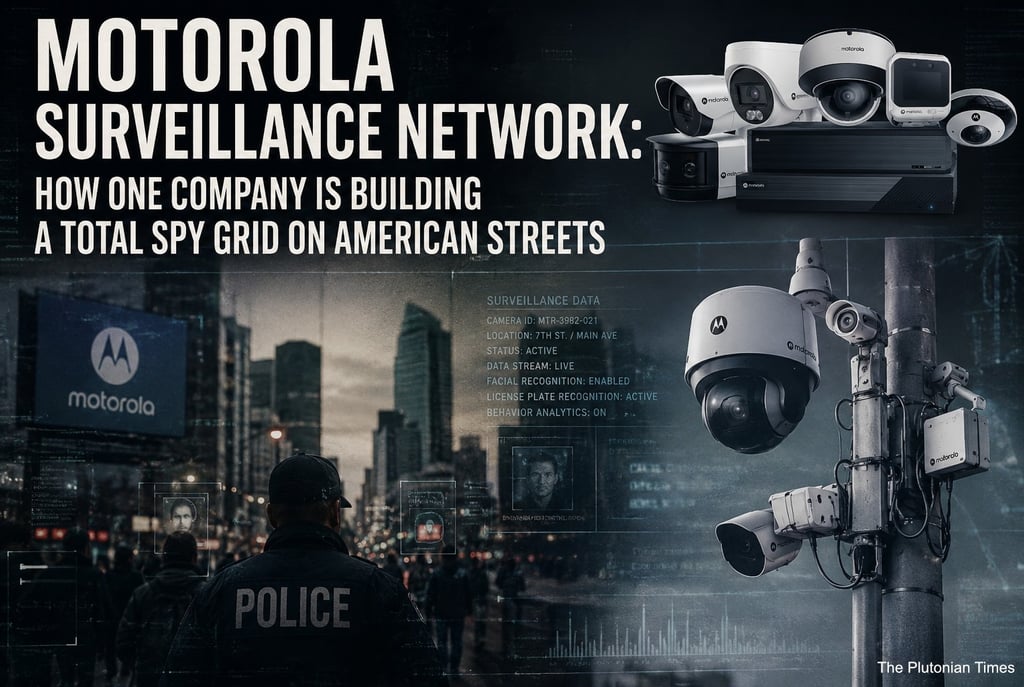
Motorola Solutions, a major player in public safety and security technology, has built a comprehensive ecosystem of surveillance cameras and related systems. These tools serve law enforcement, businesses, critical infrastructure, and governments worldwide. While marketed for safety, accountability, and crime deterrence, their widespread deployment raises significant questions about privacy, data security, mission creep, and the balance between security and civil liberties.
Motorola's Surveillance Portfolio: From Fixed Cameras to Body-Worn Systems
Motorola Solutions offers a broad range of video security products under brands like Avigilon (acquired in 2018) and Pelco. Fixed IP security cameras include bullet, dome, 360-degree panoramic, PTZ (pan-tilt-zoom), and specialty models designed for challenging environments. These cameras feature high-resolution video, low-light performance, and onboard AI analytics for object detection, anomaly identification, and license plate recognition (LPR).
Mobile solutions complement the fixed infrastructure. The V700 LTE body camera supports livestreaming, location tracking, and long battery life for law enforcement shifts. In-car systems like the M500 series capture multi-camera footage with LPR capabilities. Subscription models make deployment easier by avoiding large upfront costs, bundling hardware, software, storage, and AI tools.
Avigilon Unity and other platforms integrate video with access control, AI analytics, and real-time command center tools. Features include appearance search, automated redaction, transcription, and integration with 911 data for faster response. Long-range thermal cameras, such as Silent Sentinel models, detect anomalies at distances up to 30 kilometers in extreme conditions.
Government and Law Enforcement Adoption
Motorola cameras and systems appear in numerous public safety contracts. Police departments use them for body cameras, in-car video, and citywide networks. Examples include upgrades for departments in Madison Township, Riverside, and international deployments like Sao Paulo's 12,000 V500 body cameras.
Programs like Columbia Police Department's Motorola Registered Camera initiative encourage residents and businesses to register private cameras. This creates voluntary networks for investigators, with optional Safety Hub devices granting law enforcement live access and historical footage.
Motorola holds substantial government contracts for communications and surveillance tech, often exceeding hundreds of millions of dollars cumulatively. Its systems integrate with real-time crime centers, pulling in 911 transcripts, community video, and LPR data.
AI Analytics and Privacy Safeguards: Promises vs. Capabilities
Motorola emphasizes responsible AI use, with features like redaction tools, access controls, encryption, and audit logs. The company highlights applications in schools, retail, and critical infrastructure while committing to fairness, privacy, and compliance with standards like GDPR and FIPS.
However, the technology's power invites scrutiny. AI can enable appearance search, object tracking, anomaly detection, and integration with broader databases. Critics point to "mission creep," where tools deployed for one purpose expand into pervasive monitoring. Facial recognition capabilities, even if optional or regulated, exist in the ecosystem.
Security Vulnerabilities and Data Exposure Risks
Real-world incidents highlight vulnerabilities. In early 2025, researcher Matt Brown discovered over 150 misconfigured Motorola ReaperHD automated license plate readers (ALPRs) streaming live video, infrared feeds, and vehicle data (including plates, location, make, model, and color) openly on the internet. These legacy devices, discontinued in 2022, exposed sensitive information accessible without authentication. Motorola attributed issues to customer configurations and issued firmware updates, but the episode underscores risks in deployment and maintenance.
ALPR systems create detailed location histories for vehicles, raising concerns about mass tracking of individuals without warrants. Past reports documented unsecured streams from other vendors, and Motorola has faced legal challenges over data sharing.
Data Sharing, Partnerships, and Broader Implications
Motorola's ecosystem facilitates data sharing among law enforcement partners, prosecutors, and sometimes federal agencies. Subsidiaries and integrations have drawn attention regarding immigration enforcement and private networks. Privacy advocates note workarounds where police access business or community camera feeds, bypassing direct oversight.
International use includes critical infrastructure, borders, and events. Acquisitions expanded Motorola's reach into prisons, retail, and more, concentrating surveillance capabilities in one vendor.
Transparency, Oversight, and the Path Forward
Motorola Solutions positions its technology as essential for modern safety. Yet, as surveillance networks grow denser with AI enhancements, independent oversight becomes critical. Questions persist around retention policies, access controls, potential biases in analytics, and long-term societal impacts of constant recording and analysis.
Communities and journalists should examine local deployments, demand clear policies on data use, and push for audits. Registered camera programs and private integrations deserve particular attention for their effect on public-private surveillance blurring.
The Plutonian Times will continue monitoring these developments. Evidence-based scrutiny remains vital as technology outpaces regulation. Full disclosure and accountability protect both safety and fundamental rights in an increasingly observed world.
References
Motorola Solutions official product pages and blogs.
Reporting from Tom's Guide, Chicago Reader, EFF, and public records on contracts and incidents.
Additional sources from government sites and news on deployments (2024-2026).