Inside Yale’s Secret Vault: 300 Forbidden Occult Books That Could Change History
DISCLOSURESHISTORY
Debbie Edwards
5/20/20262 min read
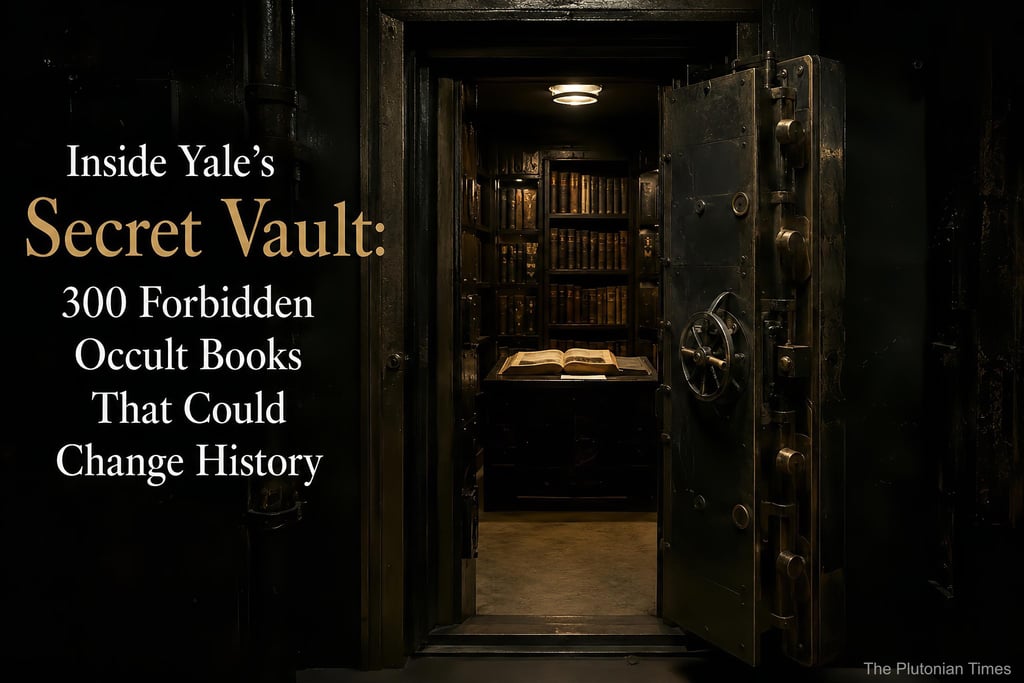
Yale University stands as a beacon of academic excellence. Yet tucked within its campus lies one of the most intriguing repositories of historically restricted texts. The Beinecke Rare Book and Manuscript Library houses extensive holdings of works once deemed dangerous, heretical, or occult.
The Beinecke Rare Book and Manuscript Library
The Beinecke Library is a striking marble structure designed to protect its fragile contents. It serves as Yale’s principal rare book and manuscript facility. Among its highlights is the Mellon Collection of Alchemy and the Occult.
The Mellon Collection of Alchemy and the Occult
This assemblage, donated by Paul and Mary Mellon in the mid-20th century, comprises over 300 medieval and Renaissance manuscripts. Many of these texts explored topics like transmutation, astrology, and natural philosophy. In earlier centuries, such pursuits often blurred lines with forbidden sorcery. This led to suspicion from church officials and secular powers.
Alchemy Manuscripts in the Collection
These manuscripts feature symbolic diagrams, coded recipes, and philosophical treatises. Practitioners sought not only material transformation, such as turning base metals into gold, but also spiritual enlightenment. During periods of strict orthodoxy, these ideas carried risks of accusations of heresy or dealings with dark forces. Yale’s preservation of these works allows modern scholars to study the roots of chemistry and scientific inquiry without the perils faced by original authors and readers.
The Mysterious Voynich Manuscript
A crown jewel of the library is the Voynich Manuscript, often called the world’s most mysterious book. Acquired by Yale in 1969, this 15th-century codex features an undeciphered script and illustrations of unknown plants, astronomical diagrams, and strange biological scenes. Its history includes ownership by Holy Roman Emperor Rudolf II and possible ties to figures like John Dee. The text’s secrecy and enigmatic nature made it the stuff of legend. Some viewed it as a forbidden grimoire or alchemical manual. Despite extensive efforts by cryptographers and historians, its secrets remain locked away.
Censored Literary Works
Beyond occult materials, Yale’s collections include literary works that faced bans in various times and places. The library has displayed titles such as George Orwell’s Nineteen Eighty-Four, James Joyce’s Ulysses, and works by Toni Morrison and Franz Kafka. These books encountered censorship for political, moral, or social reasons. This underscores ongoing debates about intellectual freedom.
Preservation and Academic Access
Yale’s commitment to these holdings reflects a broader mission to safeguard knowledge that once provoked controversy. Many such texts were suppressed because they questioned established doctrines or introduced unconventional ideas. Today, researchers can access digitized versions of select manuscripts online. This democratizes what was once elite or restricted material.
The Beinecke’s climate-controlled environment and security protocols ensure these fragile items endure for future generations. Visitors can explore public exhibitions, while scholars gain supervised access to originals. This balance preserves the aura of mystery surrounding these “forbidden” books while promoting open academic inquiry.
References
MacPhail, Ian. Alchemy and the Occult: A Catalogue of Books and Manuscripts from the Collection of Paul and Mary Mellon. Yale University Library, 1968-1977.
Beinecke Rare Book and Manuscript Library. “Voynich Manuscript.” Yale University.
Various articles and catalogs from Yale University publications on the Mellon Collection and rare holdings.
My Modern Met coverage of Yale’s alchemy manuscripts, May 2026.