
Inside Northern Virginia’s Insane Data Center Boom: 663 Operational and Hundreds More on the Way
TECHNOLOGYENVIRONMENT
Debbie Edwards
5/30/20264 min read
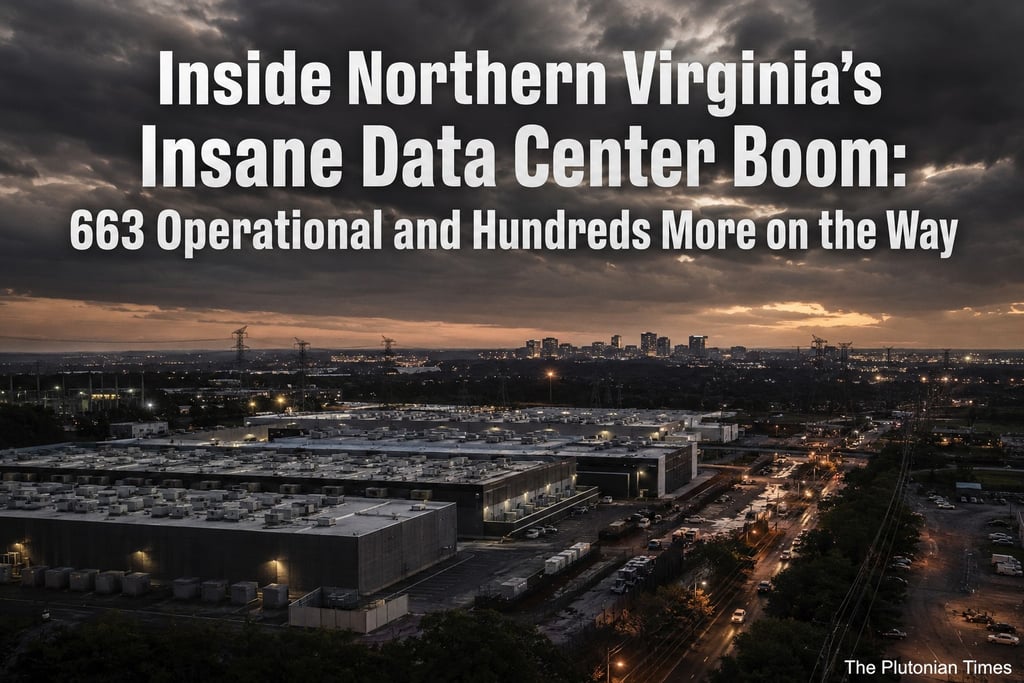
Northern Virginia, often called Data Center Alley, stands as the world's largest data center market. It processes a significant portion of global internet traffic and hosts the highest concentration of facilities in the United States. As of recent 2025-2026 reports, Virginia leads the nation with 663 operational data centers and hundreds more under construction or planned. The vast majority cluster in Northern Virginia counties such as Loudoun, Fairfax, and Prince William.
This growth stems from proximity to Washington DC, robust fiber infrastructure, tax incentives, and demand from cloud computing, AI, and hyperscale operators. Northern Virginia accounts for about 13 percent of global operational data center capacity.
Key Facts and Economic Scale
Data centers in the region drive substantial economic activity, contributing jobs, tax revenue, and GDP. Estimates suggest the industry supports around 74,000 jobs statewide and billions in annual economic output, though benefits concentrate heavily in Northern Virginia. Facilities range from colocation sites to massive hyperscale campuses consuming tens to hundreds of megawatts each.
Major operators have filed dozens of permits in recent years, with Big Tech leading expansion.
Major Developers and Operators
Leading developers and operators in Northern Virginia include:
Amazon Web Services (AWS): Operates the largest number of sites, with around 150 facilities.
Digital Realty Trust: Maintains dozens of facilities, including extensive Ashburn campuses.
Equinix: Key player with interconnected sites in Ashburn, Reston, and Vienna.
Microsoft, Meta, and Google: Hyperscale builders with large campuses, especially Meta in Henrico and others expanding in Loudoun and Prince William.
QTS Realty Trust: Develops large projects like those in Manassas and Richmond areas.
CoreSite, CyrusOne, STACK Infrastructure, Vantage Data Centers, CloudHQ: Active in building and operating multiple campuses.
Other notable players include Aligned Data Centers, NTT, Iron Mountain, Compass Datacenters, Corscale, EdgeCore, and Skybox.
Financiers and Funding
Development relies on significant capital from private equity, loans, and corporate balance sheets. Examples include EdgeCore securing loans for Northern Virginia hyperscale facilities, Ares Management investments, and HighBrook Investors funds targeting megawatts in the region. Traditional financing involves banks and infrastructure funds supporting hyperscale builds for tenants like AWS and Microsoft.
Pushback from Locals
Rapid expansion has sparked growing opposition from residents, environmental groups, and historic preservation advocates. Concerns focus on quality of life, property values, and overdevelopment in suburban and semi-rural areas. Projects near residential neighborhoods, schools, and historic sites like Manassas National Battlefield Park face strong resistance.
Groups such as the Piedmont Environmental Council and local coalitions have challenged approvals, citing noise from cooling systems, visual blight from large industrial buildings, and increased traffic. In some cases, billions in proposed projects have faced delays or blocks due to zoning fights and community pressure.
Environmental Impacts
Data centers consume enormous resources. A single large facility can use millions of gallons of water daily for cooling, with Loudoun County alone reporting over one billion gallons used in recent years. Statewide consumption has exceeded two billion gallons annually in peak periods.
Power demand strains the grid, with Dominion Energy planning massive new capacity. Backup diesel generators raise air quality issues. Emissions have more than doubled since 2020, linked to potential respiratory problems, asthma episodes, and premature deaths.
Noise pollution affects nearby homes, and land conversion from rural or residential uses fragments habitats. Critics call for stricter regulations on water use, emissions, and renewable energy integration.
Major Operational and Planned Sites and Clusters
While a complete list of all 663 operational sites plus hundreds planned is too extensive for a single article, here is a comprehensive condensed overview of the primary named campuses, clusters, and major projects across key areas:
Ashburn (Loudoun County core of Data Center Alley): Home to over 130-150 data centers. Key sites include Equinix Ashburn Campus (multiple buildings), Digital Realty Ashburn campuses (ACC4, ACC5, ACC6, ACC7, IAD12, and Digital Loudoun Plaza buildings), Vantage Ashburn Data Center Campus VA1 (206 MW), CloudHQ LC4 (180 MW), Cologix ASH1 (120 MW), and numerous Microsoft, AWS, and CoreSite facilities.
Sterling (Loudoun County): STACK NVA01 (17 MW operational), STACK NVA04 (massive scalability), EdgeCore Sterling Campus (up to 144 MW planned across four buildings), Skybox/Prologis Sterling project (30 MW), and multiple Equinix, Digital Realty, and Compass sites.
Manassas (Prince William County): Iron Mountain VA-1 through VA-9, QTS Manassas DC1-DC6 (190 MW), STACK NVA02 and NVA05 (420 MW campus planned), and over 40-69 total facilities in the broader Manassas area.
Herndon/Reston/Chantilly (Fairfax/Loudoun): CoreSite VA1/VA2/VA3 campuses, additional Digital Realty, Equinix, and Google facilities.
Prince William County / Digital Gateway Area: Large proposed corridor (partially halted in 2026 court rulings) with up to 37 buildings originally planned across 22+ million square feet, including Compass Datacenters projects, Quantico Ridge (four massive centers), Six Towers (Amazon-proposed), and other developments near Gainesville and Independent Hill. County currently has around 44 operational with 15+ more advancing.
Other Loudoun County Sites: Arcola area projects, Kincora development (Corscale 72 MW), Leesburg-area expansions, and over 100 additional sites in the development pipeline.
Broader Northern Virginia and Virginia: Meta Henrico Campus (500 MW), QTS Richmond 1 (240 MW), Google data centers in Loudoun and Prince William, Vantage and AWS campuses in various locations, DataBank sites in Ashburn and Culpeper, and emerging clusters in Spotsylvania, Stafford, and King George counties.
Northern Virginia's data center dominance brings clear economic benefits alongside real challenges in sustainability and community livability. Balancing growth with responsible development will shape the region's future.
References
Baxtel and Data Center Map reports, 2026.
Cleanview Virginia Project List, accessed May 2026.
Piedmont Environmental Council web map and statements, 2025-2026.
JLARC Virginia Data Centers Report, December 2024.
Washington Post and local news coverage, 2025-2026.
Prince William County and Loudoun County official updates, 2026.
Digital Realty, STACK Infrastructure, and industry analyses, 2025-2026.