
Inside Brazils Historic UFO Disclosure: 893 Declassified Reports Now Available
DISCLOSURES
Debbie Edwards
4/7/20265 min read
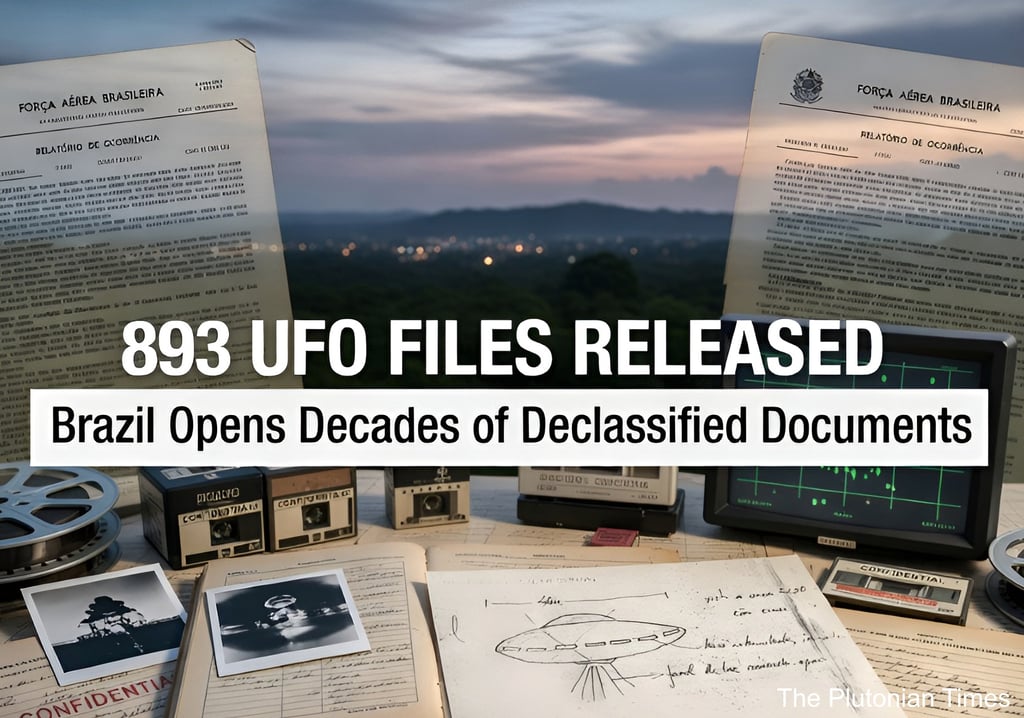

In a remarkable display of governmental openness, Brazil has made available a vast collection of more than 800 UFO sighting reports spanning more than seven decades. The Brazilian National Archives, known as Arquivo Nacional, now holds 893 incident reports dating from 1952 to 2023. These files come from military personnel, civil aviation pilots, and ordinary citizens. This release stands out as one of the most comprehensive government disclosures on unidentified aerial phenomena anywhere in the world. Unlike many nations that keep such records classified, Brazil has steadily transferred and digitized these documents for public review.
The move underscores a long-standing commitment to transparency that began accelerating in the early 2010s. It offers researchers, enthusiasts, and the curious an unprecedented window into official investigations of strange objects in Brazilian skies. No grand claims of extraterrestrial contact appear in the files. Instead, the documents provide raw accounts, photos, drawings, audio recordings, and official correspondence. Many cases remain unexplained, while others likely have conventional explanations. The value lies in the openness itself.
A Rich History of Official UFO Investigations in Brazil
Brazil’s engagement with UFOs, or unidentified flying objects as they were traditionally called, dates back to the early days of modern aviation and the global UFO wave of the 1950s. The first documented reports in the archives trace to 1952, including classic flying saucer sightings such as photographs taken over Barra da Tijuca in Rio de Janeiro.
By the late 1960s, the Brazilian Air Force had formalized its approach. In 1969 it created SIOANI, the Sistema de Investigação de Objetos Aéreos Não Identificados, to systematically collect and analyze reports. This effort produced nearly 100 detailed case files before it ended in 1972.
One of the most intense episodes occurred in 1977 on the island of Colares in the northern state of Pará. Known as Operação Prato, or Operation Saucer, this military investigation responded to reports of glowing objects that allegedly directed beams of light at residents, causing burns and other injuries. The operation generated thousands of photos, hours of film, and a lengthy report that remained classified for decades.
Another landmark event took place on the night of May 19, 1986, often called the Official UFO Night. Multiple radar stations tracked 21 unidentified objects moving at high speeds over southeastern Brazil. Five fighter jets scrambled to intercept them, and the pilots reported visual contact with the phenomena. The Brazilian Air Force later held a press conference acknowledging the encounters, an unusually candid admission for any military at the time.
These historical episodes form the backbone of the early portions of the archive. Later decades saw continued reporting, especially from commercial pilots who frequently filed official accounts of anomalous lights or objects during flights.
The Policy Shift That Made Disclosure Possible
For years many of these records stayed within military channels. A pivotal change came in 2010 with Ordinance 551/GC3, issued by the commander of the Brazilian Air Force. This directive required all branches of the armed forces and aviation authorities to forward every UFO report, along with any supporting evidence such as photos or videos, to the Aerospace Defense Command in Brasília on an annual basis. The materials would then be cataloged and prepared for eventual public release.
Two years later, in 2012, Brazil enacted Law 12,527, its Freedom of Information Act. This legislation triggered a surge of public requests for UFO data. Within months the Air Force began transferring large batches of documents to the National Archives. The UFO collection quickly became the most visited holdings in the entire archive, outpacing even requests about historical figures or major political events.
Periodic releases followed. By the mid-2010s the archives held around 743 records covering up to 2016. Updates continued as new reports arrived, and in recent years the total reached 893 incidents through 2023. News outlets reported that authorities advanced the release schedule, making the latest batch available ahead of an anticipated June 2025 deadline.
What the Files Actually Contain
The collection, officially titled Fundo Objeto Voador Não Identificado (OVNI) with reference code BR DFANBSB ARX, includes a wide variety of materials. Reports range from brief pilot logs to multi-page questionnaires filled out by witnesses. Supporting items feature:
23 photographs
3 videomagnetic tapes
16 audiomagnetic tapes
drawings
newspaper clippings
official correspondence
Many recent additions come directly from civil aviation pilots. One 2023 batch alone included 30 pilot reports, with some describing objects traveling at speeds several times the speed of sound or vanishing abruptly after hovering.
The documents are organized chronologically within the SIAN digital system. They cover sightings across Brazil, from the southern state of Rio Grande do Sul to northern regions and major cities. The archive does not evaluate or explain the phenomena. It simply preserves the primary source material so that independent researchers can study it.
How Anyone Can Access the Files
Access is straightforward and free. Visit the National Archives’ SIAN platform at sian.an.gov.br. Create a free account using a gov.br login. Foreign users can often register with a passport number or similar identification. Once logged in, navigate to Favorites and select “Objeto Voador Não Identificado” or search for the OVNI collection. All digitized documents appear there for online viewing.
Physical originals reside at the archives’ Brasília regional unit, but the vast majority of the collection is now available digitally. The archives also maintain a Pinterest board with selected images from the files for quick browsing.
New reports continue to arrive. Citizens or pilots who witness something unusual can submit details directly to the archives or through official military channels, ensuring the collection keeps growing.
Why This Matters for Global UFO Disclosure
Brazil’s approach contrasts sharply with policies in countries such as the United States, where many UAP records remain classified or heavily redacted. By placing nearly 900 raw reports in the public domain, Brazil demonstrates that transparency does not threaten national security. Instead, it invites scrutiny, scientific interest, and public engagement.
The files contain no smoking-gun evidence of extraterrestrial visitation. They do reveal a consistent pattern of credible witnesses, including trained pilots and military personnel, reporting phenomena that defy easy explanation. This data set offers valuable material for researchers studying aerial anomalies, atmospheric effects, or even potential advanced technology, whether human or otherwise.
In an era when governments worldwide face growing pressure to address unidentified aerial phenomena, Brazil’s model stands as a practical example. It shows that systematic collection, centralized archiving, and timely public release can coexist with military readiness.
Resources for Further Reading and Research
Official Collection Page: https://dibrarq.arquivonacional.gov.br/index.php/objeto-voador-nao-identificado-ovni
SIAN Access Portal: https://sian.an.gov.br/sianex/consulta/login.asp
National Archives Overview Article: https://www.gov.br/arquivonacional/pt-br/canais_atendimento/imprensa/noticias/conheca-o-fundo-sobre-ovnis-do-arquivo-nacional
2024 News Coverage on Pilot Reports: https://cultura.uol.com.br/noticias/68025_arquivo-nacional-divulga-mais-de-800-relatos-de-ovnis-por-parte-de-pilotos-da-aviacao-civil.html
English-Language Summaries and Translations: Search for “Brazilian UFO Archives” projects or visit independent sites that have begun cataloging select translated cases.
Brazil’s decision to drop these files into the public sphere represents a quiet but significant victory for open government and scientific curiosity. Whether you approach the topic with skepticism or fascination, the archives invite direct examination of the evidence. The skies above Brazil have hosted mysteries for decades. Now the records belong to everyone.