How a Children’s Science Museum Became Part of the CIA’s Psychic Program
DISCLOSURESPARAPSYCHOLOGY & CONSCIOUSNESS STUDIES
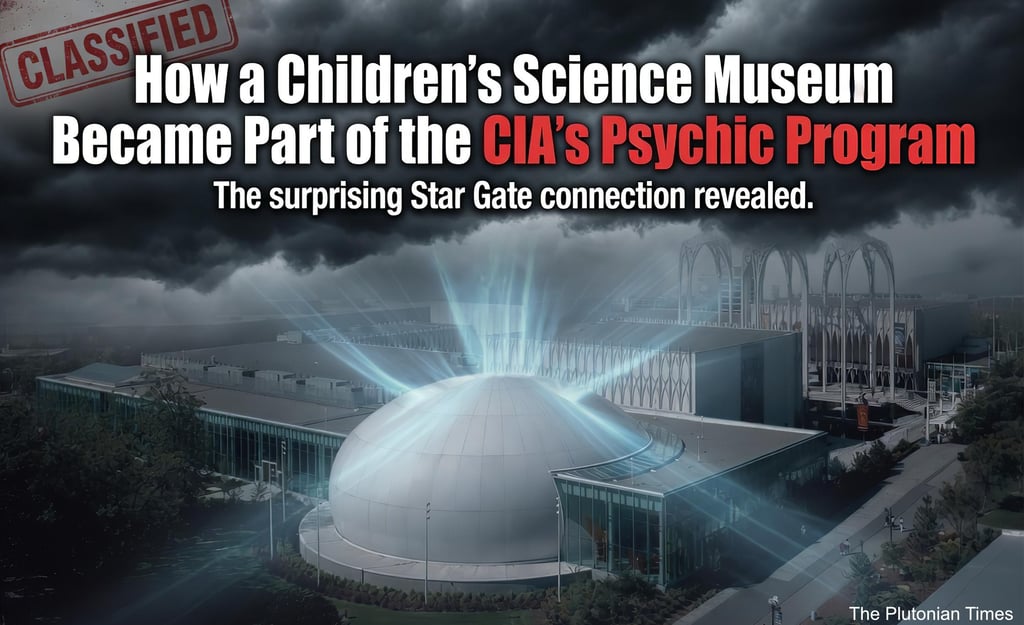
The Pacific Science Center in Seattle, Washington, opened in 1962 during the World’s Fair and remains a leading hands-on science museum. It features interactive exhibits on physics, biology, space, and technology, supported by funding from ticket sales, National Science Foundation and NASA grants, corporate sponsors, and private donations. Its programs emphasize empirical STEM education through planetarium shows, IMAX films, and youth outreach.
While the center focuses entirely on mainstream science education, its features have quietly served another purpose in specialized training exercises; Remote Viewing experiments.
Paul H Smith and His Role in Remote Viewing
Smith served for seven years from 1983 to 1990 in the US governments Star Gate remote viewing program at Fort Meade Maryland formerly known by code names such as Grill Flame Center Lane and Sun Streak. This program operated under Army and Defense Intelligence Agency oversight with some CIA interest and aimed to explore remote viewing for intelligence collection during the Cold War. Smith was personally trained in CRV by the methods originators Ingo Swann and Dr Harold E Puthoff at SRI International. He authored the programs official CRV training manual served as theory instructor recruiting officer security officer and unit historian and conducted over one thousand training and operational sessions. After leaving the military in 1996 he founded RVIS to teach the same CRV methodology to civilians preserving the protocols developed for government use.
Why the Pacific Science Center Was Selected as a Target
Smith used the Pacific Science Center in a documented Stage 4 CRV demonstration session numbered 12032800B. This location was chosen as the target because it serves as an ideal neutral verifiable public landmark for blind practice sessions. Its distinctive features such as the architectural layout exhibits and visitor focused environment allow students to generate detailed impressions without prior knowledge or cues while providing clear feedback once the target is revealed. This makes it an effective educational tool in CRV training where the goal is to teach structured protocols for perceiving distant or hidden locations. Viewers described impressions of a large multi building complex in an urban area with spacious interiors divided sections and crowds of people engaged in observing examining and enjoying displays. These details matched the centers layout exhibits and visitor experience.
Trainers choose such public landmarks for practice because they provide clear verifiable feedback. The centers distinctive architecture and activities allow students to practice blind sessions effectively. No formal documents show the facility itself to have conducted remote viewing research, or hosted any related programs.
References
Example Remote Viewing Session Stage 4, Remote Viewing Instructional Services
Biography for Dr Paul H Smith, Remote Viewing Instructional Services,
Public records and declassified documents related to the Star Gate program and the history of the Pacific Science Center.