
Hospitals Caught Harvesting Organs From Living Patients - The Shocking Truth Exposed
Blog post description.
UNSOLVED MYSTERIES & CRIMESCIENCE
Debbie Edwards
5/29/20264 min read
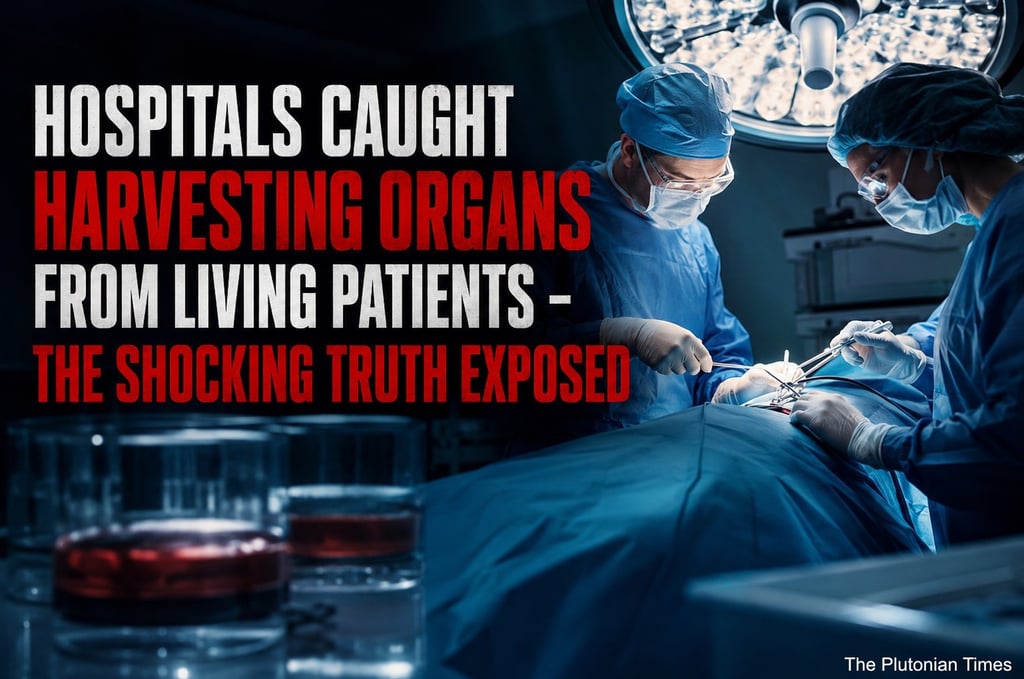

Organ donation saves thousands of lives each year, yet the system involves intricate medical, legal, and ethical considerations. Public trust remains essential, but recent controversies highlight challenges in balancing urgency with safeguards.
How Organ Harvesting Occurs: The Requirement for Viable Organs
Organ harvesting, or procurement, requires organs to remain viable, which generally means they must come from donors whose hearts are still beating or very recently stopped. This leads to two primary pathways: donation after brain death (DBD) and donation after circulatory death (DCD).
In brain death cases, physicians declare death based on irreversible loss of all brain function, including the brainstem. The body remains on a ventilator, maintaining circulation so organs stay oxygenated. Harvesting then proceeds in a surgical setting.
In DCD, patients with severe injuries do not meet full brain death criteria but have a poor prognosis. Life support is withdrawn with family consent, and death is declared after circulatory arrest (typically after a waiting period of several minutes). Organs are recovered promptly thereafter. Some protocols, such as normothermic regional perfusion, aim to restore circulation to certain organs post-declaration to improve viability, though these remain ethically debated.
Harvesting cannot occur on a truly deceased person whose organs have deteriorated from lack of blood flow for too long. This medical reality raises questions about the precise timing of death declarations relative to procurement.
Moral Implications
Organ donation rests on principles of altruism, autonomy, and beneficence. The "dead donor rule" requires donors to be declared dead before procurement to avoid causing death through organ removal. Critics argue that some practices blur this line, potentially pressuring families or rushing declarations to meet demand.
Ethical concerns include informed consent, potential conflicts of interest for hospitals and organ procurement organizations (OPOs), and equitable allocation. Financial incentives for donation raise worries about coercion, especially among vulnerable populations. Internationally, forced organ harvesting represents severe human rights violations.
In the U.S., questions persist about whether the system's emphasis on increasing donation rates sometimes prioritizes organs over patient recovery potential. Balancing the gift of life with respect for the dying process remains a core tension.
Legal Red Tape and Regulations
The National Organ Transplant Act of 1984 prohibits buying or selling organs for "valuable consideration." States follow versions of the Uniform Anatomical Gift Act. Organ procurement organizations operate under federal oversight from the Centers for Medicare and Medicaid Services (CMS) and HRSA.
Hospitals must notify OPOs of potential donors. Strict separation exists between care teams and procurement teams to avoid conflicts. Brain death determination follows specific clinical protocols, including apnea tests.
Bureaucratic requirements, such as documentation, matching processes, and quality controls, create delays but aim to ensure safety and fairness. Recent legislative efforts seek to streamline hospital referrals while maintaining protections.
Current Litigation and Hospital Scrutiny
The U.S. organ donation system has faced significant scrutiny in recent years. A July 2025 HRSA investigation into Network for Hope (formerly Kentucky Organ Donor Affiliates, or KODA) examined 351 incomplete donation cases. It found concerning features in about 29 percent, including 73 patients with neurological signs potentially incompatible with donation protocols. At least 28 cases raised questions about whether patients were deceased when procurement began.
The case of Anthony Thomas "T.J." Hoover II gained national attention. In 2021, Hoover, then 33, was hospitalized at Baptist Health Richmond in Kentucky following a drug overdose. He was declared brain dead, and preparations for organ procurement began. Family members and staff later reported Hoover showing signs of life, including thrashing, purposeful movement, eye tracking, and attempting to lift his head. Hospital staff reportedly described the situation as "euthanasia-like," and the procedure was halted. Hoover survived but with neurological impairments. Whistleblower Nyckoletta Martin, a former Network for Hope employee, brought details forward in congressional testimony.
In Iowa, a May 2026 lawsuit accuses CHI Health-Missouri Valley (also known as Alegent Health-Community Memorial Hospital of Missouri Valley) of harvesting organs from a deceased patient without proper family consultation. The children of the patient, referred to in reports as involving Mr. Gillespie, filed the complaint in U.S. District Court for the Southern District of Iowa. The incident allegedly occurred in early April 2026.
In New Jersey, congressional investigations highlighted an incident at Virtua Our Lady of Lourdes Hospital in Camden. An unnamed patient was pronounced dead, and the New Jersey Organ and Tissue Sharing Network (NJTO) began organ recovery procedures. The patient reportedly "reanimated," prompting hospital staff to intervene and stop the process. Whistleblowers alleged pressure to proceed and subsequent document manipulation.
Other cases include lawsuits against Loyola University Medical Center in Illinois over alleged improper transplant practices and scrutiny of physicians such as Dr. Scott Bynon at Memorial Hermann Health System in Houston, indicted in 2026 for allegedly falsifying patient records affecting transplant eligibility.
HHS under Secretary Robert F. Kennedy, Jr., responded with reform initiatives, including corrective actions for involved OPOs and broader system reviews. Congressional hearings have addressed these issues, focusing on patient safety, consent, and oversight.
Moving Forward
Organ donation remains a profound act of generosity that transforms lives. However, maintaining public confidence requires transparent processes, rigorous adherence to death determination standards, and robust oversight. Reforms addressing recent findings could strengthen safeguards while preserving the system's life-saving potential. Individuals considering donation should discuss wishes with family and review current policies through official channels.
References
New York Times, "Doctors Were Preparing to Remove Their Organs. Then a Nurse Said They Were Moving," June 6, 2025.
HHS Press Release on organ procurement investigation, July 21, 2025.
Iowa Capital Dispatch, "Iowa hospital accused of harvesting patient's organs without authorization," May 7, 2026.
CNN, reports on New Jersey organ procurement investigation, November 19, 2025.
U.S. Department of Justice, indictment announcement regarding Houston physician, February 5, 2026.