
From Floodwaters to Formaldehyde Poisoning: How FEMA Turned Hurricane Katrina Survivors Into Medical Victims
HISTORY
Debbie Edwards
5/29/20264 min read
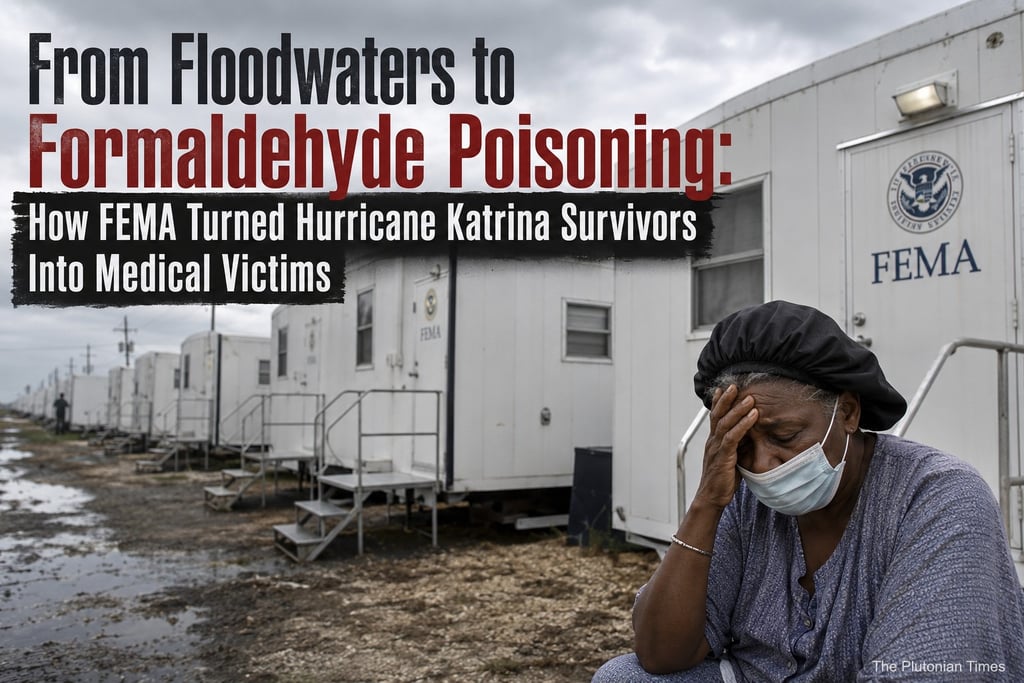
Hurricane Katrina made landfall on the Gulf Coast on August 29, 2005, as a powerful Category 3 storm. It became one of the most devastating natural disasters in United States history, primarily due to the catastrophic failure of the levee system in New Orleans. The storm exposed deep vulnerabilities in infrastructure, emergency preparedness, and government response. Two decades later, its impacts continue through ongoing health issues, economic disparities, and legal battles.
The Human Cost: Death Toll and Immediate Devastation
Initial reports placed the death toll at around 1,800, but revised analyses have adjusted this figure. The National Hurricane Center now estimates 1,392 fatalities, with the majority in Louisiana. Many deaths resulted from drowning, but a significant portion stemmed from indirect causes such as exacerbation of chronic illnesses due to lack of medical access, displacement, and poor living conditions in the aftermath.
Vulnerable populations, including the elderly and low-income residents without means to evacuate, suffered disproportionately. Images of people stranded on rooftops and at the Superdome highlighted failures in evacuation planning and shelter provision.
Government Mismanagement and the FEMA Response
The federal response, led by the Federal Emergency Management Agency (FEMA), drew widespread criticism for delays and inefficiencies. Critics pointed to slow deployment of resources, bureaucratic hurdles, and poor coordination with state and local authorities. One of the most troubling aspects involved the provision of temporary housing through FEMA trailers.
FEMA purchased more than 120,000 travel trailers and mobile homes to shelter displaced residents after Hurricanes Katrina and Rita. However, many trailers sat unused in storage lots for extended periods while survivors struggled in overcrowded shelters or with relatives. Distribution proved slow and uneven. Far more serious was the discovery that a large number of these units contained dangerously elevated levels of formaldehyde, a known carcinogen used in the manufacture of plywood, particleboard, and other building materials.
Reports of health problems began surfacing in 2006. Residents complained of persistent headaches, nosebleeds, burning and watery eyes, nausea, respiratory difficulties, and flu-like symptoms. Government and independent tests confirmed the issue. A federal report in July 2006 found toxic levels of formaldehyde in 42 percent of the trailers examined. The Centers for Disease Control and Prevention (CDC) later tested 519 trailers and determined that average formaldehyde levels were about five times higher than those found in most modern homes, with some units showing dramatically higher concentrations.
The Sierra Club conducted its own testing and reported that 83 percent of sampled trailers exceeded Environmental Protection Agency recommended limits. Poor ventilation in the small, hastily constructed units, combined with substandard materials used to meet rapid production demands, worsened the problem. Formaldehyde exposure is linked to immediate irritation and, with chronic exposure, to increased cancer risk.
Medical Scandals and Health Hazards from FEMA Trailers
The formaldehyde issue created what many described as a secondary public health crisis. Thousands of families, already traumatized by the hurricane, faced additional harm from the very shelters meant to protect them. Over 100,000 families lived in FEMA trailers or manufactured homes at some point. Congressional hearings in 2008 revealed that FEMA had received hundreds of health complaints, including reports linked to at least two deaths, yet agency officials often downplayed the risks or delayed action to avoid liability and negative publicity.
FEMA field staff raised alarms as early as 2006, but internal communications showed a focus on limiting testing and public disclosure. Critics accused the agency of prioritizing legal protection over resident safety. Many residents, particularly children, the elderly, and those with pre-existing conditions, experienced worsened health outcomes. Long-term effects remain a concern, with formaldehyde classified as a human carcinogen by the International Agency for Research on Cancer.
Lawsuits and Number of Victims Involved
Affected residents filed multiple lawsuits against trailer manufacturers, installers, and in some cases FEMA. In 2012, U.S. District Judge Kurt Engelhardt approved a $42.6 million class-action settlement. Roughly 55,000 residents from Louisiana, Mississippi, Alabama, and Texas became eligible to share in the funds. Manufacturers contributed $37.5 million, while contractors responsible for installation and maintenance paid an additional $5.1 million.
Plaintiffs alleged severe health impacts from prolonged exposure. While direct government liability faced hurdles due to sovereign immunity in certain jurisdictions, the settlements with private companies provided some compensation. Separate efforts addressed ongoing issues, though many victims reported that payouts were modest after attorney fees. Health-related claims and advocacy continued for years, with some residents experiencing persistent symptoms.
The inadequate distribution of these trailers, combined with their health hazards, left many displaced families in unsafe conditions for months or years. Thousands remained in the units long after warnings emerged.
Mismanagement of Funds
Billions in federal aid flowed to the region, but accountability issues persisted. GAO reports estimated hundreds of millions to over a billion dollars in improper and potentially fraudulent individual assistance payments. Contractors overcharged for services like debris removal and housing maintenance.
Current Litigation and Investigations
Legal repercussions continue years later. Lawsuits against the U.S. Army Corps of Engineers addressed levee failures, though sovereign immunity limited some claims. Insurance disputes have resulted in significant awards. Efforts to recover misused funds and address trailer-related harms have included ongoing advocacy. Health-related litigation from formaldehyde exposure contributed to the major 2012 settlements.
References
National Hurricane Center reports and updates on Hurricane Katrina.
U.S. Government Accountability Office (GAO) investigations into FEMA programs.
Centers for Disease Control and Prevention findings on formaldehyde in trailers.
Congressional hearings and reports on toxic trailers.
Federal court records on the 2012 class-action settlement.
Peer-reviewed studies and investigative reports on long-term health and litigation impacts.