
Beyond Lithium: How Nature, Tiny Gold Particles, and Deep-Tech Could Power Green Energy Initiatives
ENVIRONMENT
Debbie Edwards
4/6/20265 min read
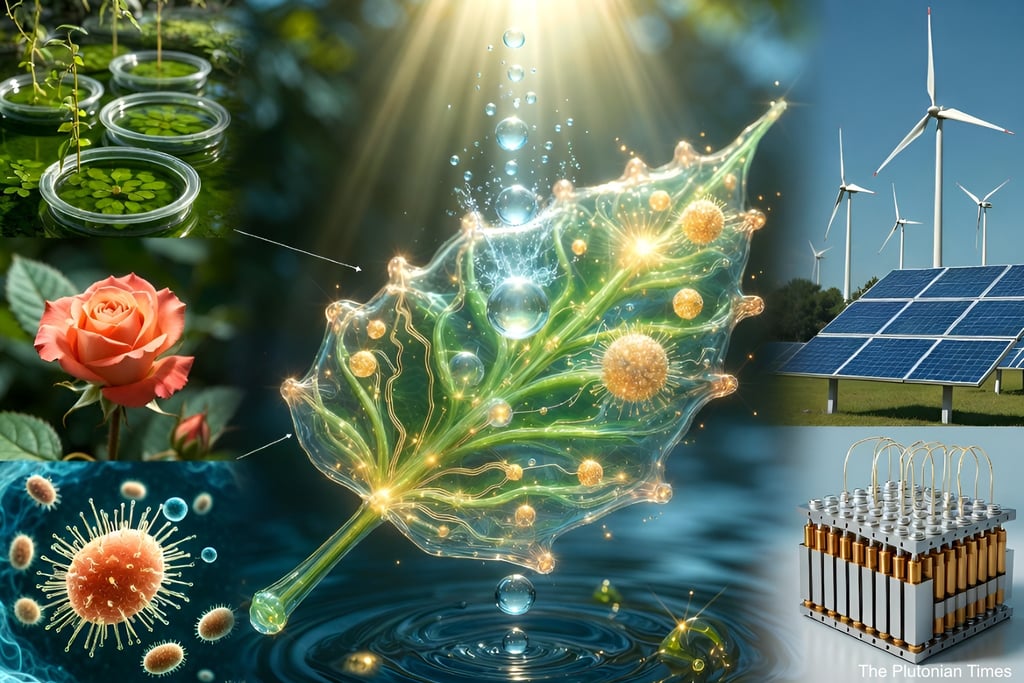
Green energy initiatives are ambitious plans aimed at fighting climate change by switching to 100 percent clean and renewable energy. These plans also focus on creating millions of good-paying jobs and making society fairer. They represent a modern push for clean air, clean water, resilient communities, and economic opportunity for everyone, especially those who have been left behind in the past.
At their core, green energy initiatives seek to remove carbon pollution from electricity, cars, buildings, and factories. They rely heavily on solar panels and wind turbines. However, these sources only produce power when the sun shines or the wind blows. That is why reliable energy storage is essential. Storage systems hold extra energy for use when it is needed later.
The Lithium Challenge
Today most energy storage comes from lithium-ion batteries, the same kind found in phones, laptops, and electric cars. These batteries are lightweight, powerful, and rechargeable thousands of times. Yet they come with serious drawbacks when scaled up to the huge levels needed for nationwide clean energy goals.
Mining lithium uses enormous amounts of water, damages natural habitats, and creates toxic waste. Supply chains face geopolitical tensions and price swings. Lithium batteries can overheat or catch fire, although this is rare. Recycling them at massive scale remains challenging. They perform well for short-term storage of a few hours, but long-duration storage becomes very expensive.
Scientists are therefore developing non-lithium alternatives such as sodium-ion batteries, zinc-based systems, flow batteries, and completely different approaches like storing energy as hydrogen gas or liquid fuels. One especially promising path combines biology, gold nanoparticles, and deeper-scale engineering at the molecular and nano level. These methods mimic how plants work, use eco-friendly manufacturing, and could create a truly circular, low-impact energy system.
Bio Processes: Learning from Nature
Nature has been turning sunlight into energy for billions of years through photosynthesis, the process plants use to capture light, split water, and make sugars while pulling carbon dioxide from the air.
Bio processes copy and improve upon this natural system. Instead of mining rare metals, scientists use living organisms or natural extracts. Green synthesis of nanomaterials relies on plant leaves, flowers, algae, bacteria, or fungi to turn gold salt into tiny gold particles at room temperature. No harsh chemicals or high heat are required. For example, extracts from roses, oleander, or certain microalgae produce stable gold nanoparticles usually 6 to 40 nanometers wide, about 1,000 times thinner than a human hair. These particles are safer for the environment and cheaper to produce.
Photosynthetic and microbial systems draw from natural photosynthesis. Light-dependent reactions in plant proteins split water, while other reactions fix carbon dioxide. Engineered bacteria or yeast, powered by sunlight, can produce hydrogen gas, acetic acid, or other useful fuels. Some systems even convert carbon dioxide into valuable chemicals, helping reduce greenhouse gases.
In green energy initiatives, these bio processes could support small, local bio-refineries or algae ponds that produce fuel where it is needed. This approach creates jobs in rural and underserved communities while cutting transportation emissions.
Gold Nanoparticles: Tiny Power Boosters
Gold nanoparticles are specks of gold so small they behave differently from ordinary gold. They possess special optical and electrical properties that allow them to concentrate light energy like tiny antennas.
When produced through bio processes, these nanoparticles become even more sustainable. In artificial photosynthesis, gold nanoparticles act like artificial versions of chlorophyll, the green pigment in plants. They absorb light, especially green wavelengths, and help move electrons and protons to split water into hydrogen and oxygen or to turn carbon dioxide into fuels. Some experiments show up to four times better efficiency than previous methods. They can be combined with plant proteins or bacteria to create biohybrid systems that generate electricity or hydrogen directly from sunlight.
In energy storage, gold nanoparticles improve non-lithium batteries. In zinc batteries, a promising, cheap, safe, and abundant alternative to lithium, a very thin layer of gold nanoparticles dramatically reduces dangerous dendrite growths. These spiky metal formations can short-circuit batteries and cause failure. Lab tests have shown gold-treated zinc batteries lasting over 6,000 hours of cycling with far fewer problems. Zinc is abundant, non-flammable in water-based versions, and much easier to mine and recycle than lithium. Gold nanoparticles also enhance supercapacitors and other non-lithium systems by improving conductivity and electron flow.
Deeper-Scale Projects: Engineering at the Molecular Level
Deeper-scale projects work at the tiniest levels, including atoms, molecules, and nano-interfaces, where quantum effects and precise biological interactions occur. Instead of simply installing large solar panels, these projects build hybrid systems that combine biology and nanotechnology.
Artificial photosynthesis is a leading example. It functions like a synthetic leaf that uses sunlight to split water or reduce carbon dioxide into storable fuels such as hydrogen or liquid hydrocarbons. This method can provide long-term energy storage without relying on batteries. Recent advances in nanomaterial-biohybrid systems pair light-absorbing nanoparticles, including gold, with microbes or enzymes. Efficiencies continue to improve. Some laboratory systems now exceed 10 to 20 percent in key steps, compared with nature’s roughly 1 to 6 percent overall.
Real-world examples include bionic leaves that combine silicon, catalysts, and engineered bacteria to produce fuels or chemicals 10 to 1,000 times faster than natural plants. Other systems use bacteria coated with gold nanoclusters to turn carbon dioxide into acetic acid using light. Hybrid setups wire plant photosystems to gold or graphene for better electron transfer.
These technologies can produce hydrogen, a clean fuel that can be stored indefinitely and used in fuel cells to generate electricity on demand without any lithium. They also support circular economies where waste carbon dioxide becomes a useful feedstock and byproducts feed back into the system.
Why This Matters for Green Energy Initiatives
Combining these elements creates a closed-loop vision. Bio processes provide a green, low-energy way to make materials and run reactions. Gold nanoparticles serve as precision catalysts and light-harvesters at the nano-interface. Deeper-scale biohybrids deliver high-efficiency conversion of sunlight into fuels or electricity.
The benefits include much lower environmental impact and reduced demand for mining. These approaches use safer, more abundant materials such as zinc, sodium, and carbon-based systems. They open the door to decentralized, community-scale production that creates local jobs. They also enable direct production of storable fuels for long-duration needs and for hard-to-electrify sectors like aviation or heavy industry.
Challenges still exist. Scaling from laboratory experiments to gigawatt factories takes time. Overall efficiency and long-term durability in real-world conditions must improve. Costs need to become competitive with current lithium systems. Strong policy support, including investments in research, development, and manufacturing, will be important.
Research is advancing quickly. Studies from 2023 to 2026 show steady progress in biohybrid systems, green-synthesized gold nanoparticles, and dendrite-free zinc batteries. These technologies could help make green energy initiatives not just possible, but truly sustainable. They offer a path toward a cleaner, fairer, and more resilient energy future without repeating past environmental mistakes.
This deep-tech combination demonstrates how innovation inspired by nature, paired with smart nanoscale engineering, can solve major problems. It transforms the challenges of energy intermittency and material limits into opportunities for a more harmonious energy system.
Sources
Bharadwaj et al., Green Synthesis of Gold Nanoparticles Using Plant Extracts (2021) – Overview of plant-based methods including Rosa rugosa and similar extracts.
Barai et al., Nerium oleander-conjugated gold nanoparticles (2018).
Concordia University / Interesting Engineering, Gold nanoparticle coating for zinc batteries (2026) – Reports over 6,000 hours cycling with reduced dendrites.
Allakhverdiev, Artificial Photosynthesis: Powering a green new deal for sustainable energy (2024).
Nocera Lab / Scientific American, Bionic leaf efficiency (2016 onward) – 10 times or more efficient than natural photosynthesis in fuel production.