Betrayal in Uniform: Pentagon Deletes 180 Religions Including Shamanism, Targeting Native American Service Members
DISCLOSURES
Debbie Edwards
6/6/20263 min read
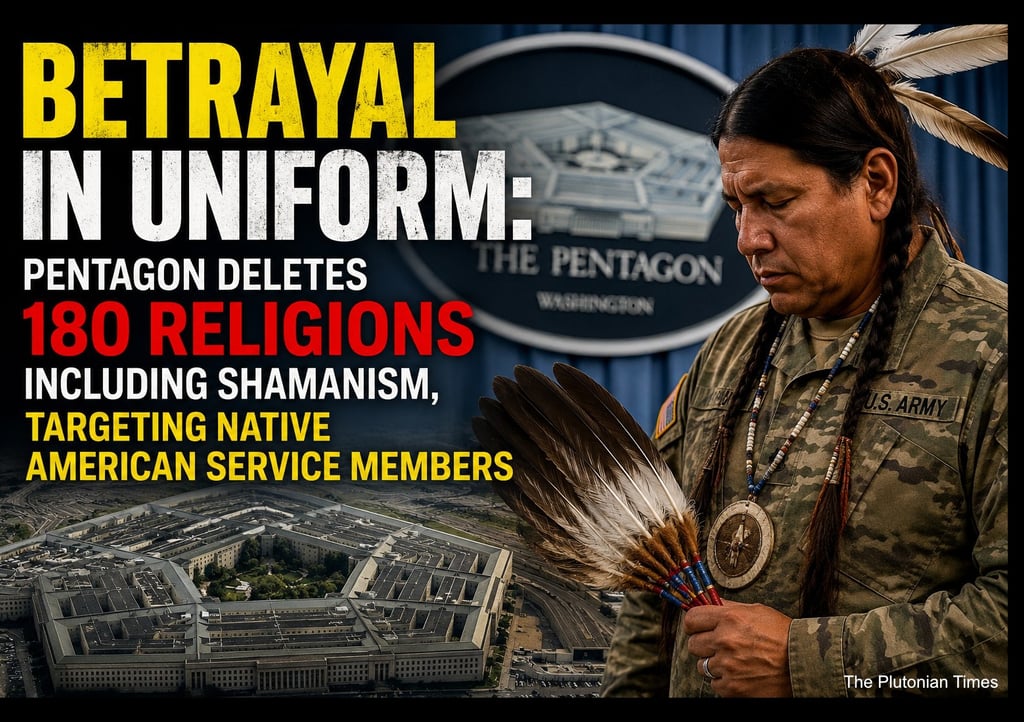
On June 4, 2026, the Department of Defense issued a memo that slashed the number of officially recognized religious affiliation codes for US military personnel from more than 200 to just 31. Undersecretary of Defense Anthony Tata authored the memo under direction from Secretary of War Pete Hegseth. This represents the first major overhaul of the faith codes since the 2017 expansion.
The stated goal is to streamline data collection on service members' religious preferences and enhance targeted religious support through the Chaplain Corps. Officials highlighted that around 82 percent of religious service members previously relied on only a small number of common codes. The new list keeps broad categories such as Agnostics, Buddhists, Hindus, Islam (Muslims), Judaism, Sikh, No Religion, Other Religions, and major Christian denominations including Baptists, Catholics, Lutherans, and Methodists.
Among the roughly 180 faiths removed is Shaman. The prior system recognized a diverse range of minority traditions, including Atheists, Asatru, Deists, Druids, Eckankar, Heathens, Humanists, Magick, New Age churches, Pagan, Rosicrucianism, Shaman, Spiritualists, The Troth, Unitarian Universalists, and various Wiccan groups.
Deep Impact on Native American Communities
Shamanism holds profound roots in Native American spiritual traditions. Many Native American service members draw on shamanic practices centered on connections to ancestors, nature, spirits, and generational ceremonial healing. The elimination of the specific Shaman code forces these practitioners into vague "Other" categories. This reduces their visibility in military data systems and threatens accommodations for their unique spiritual needs.
Native Americans have served in the US armed forces at exceptionally high per capita rates throughout history. From Code Talkers in World War I and II to modern contributions, indigenous warriors have brought distinctive skills, resilience, and cultural perspectives to the nation's defense. The erasure of Shamanism recognition strikes at the heart of this legacy.
Strong Responses from American Indian Communities
Outrage has spread quickly across Native American veterans, active service members, tribal advocates, and military forums. In Reddit discussions within Air Force and Navy communities, one service member voiced widespread frustration: "They even removed Native Americans, not just a race but a religion." This sentiment underscores the perception that the policy dismisses indigenous identity tied to spiritual traditions.
Former military chaplains and advocacy organizations have amplified these concerns. A former U.S. Army chaplain, speaking to Military.com, labeled the revisions "a tragedy and travesty." The chaplain stressed the constitutional oath to uphold free exercise of religion for all, warning that the changes hinder access to appropriate spiritual care for minority believers, including those following shamanic paths.
Mikey Weinstein, co-founder of the Military Religious Freedom Foundation (MRFF), which supports many service members from diverse backgrounds including indigenous ones, delivered sharp criticism. He called the reduced list "a middle finger to the United States Constitution’s separation of church and state." Weinstein argued the move advances Christian nationalism and undermines religious freedom across the board, with particular harm to underrepresented traditions like shamanism.
Native American voices emphasize that shamanic practices are not optional personal beliefs but living elements of tribal sovereignty, community healing, and cultural survival. Leaders and veterans argue that lumping these into generic categories erases essential data for policy-making, chaplain training, and accommodations. This risks violating principles of equal treatment and religious liberty for indigenous personnel who have sacrificed greatly for the country.
Tribal organizations and Native veterans groups are closely monitoring implementation. Many see this as part of a broader pattern of institutional disregard for indigenous contributions and rights, calling for immediate reversal or legal challenges to protect spiritual recognition.
Implications for Native American Service Members
Spiritual Accommodations: Requests for ceremonial time, sacred items, or culturally aligned counseling may face new hurdles without specific code recognition.
Data and Resources: Reduced visibility could lead to underfunding and understaffing of support for indigenous spiritual needs within the Chaplain Corps.
Cultural Erasure: The decision diminishes the military's acknowledgment of diverse faiths that have enriched its ranks, potentially discouraging Native American enlistment or retention.
Legal Pushback: Advocacy groups, including those representing Native American rights alongside MRFF, are weighing challenges based on First Amendment protections and treaty obligations with sovereign tribes.
This policy shift exposes ongoing tensions between bureaucratic streamlining and the military's duty to honor the full diversity of beliefs among those who defend the nation. Native American communities, with their proud warrior heritage, demand that shamanic traditions receive the respect and recognition they have earned through generations of service.
References
Military.com: "DOD Officially Drops 180 Faiths From Military's Recognized Religion List" (June 4, 2026).
Fox News: "Pentagon drops 180 faiths from military's recognized religions list" (June 5, 2026).
The Wild Hunt: Coverage of Shaman and minority faith exclusions (June 2026).
Statements from Mikey Weinstein and MRFF, former Army chaplain, and community discussions (June 2026).
Historical DOD Faith and Belief Codes documents (2017 expansions).