
Astronomers Puzzled- Mysterious Radio Signal from Deep Space Pulses Every 16 Days
SCIENCE
Debbie Edwards
4/4/20264 min read
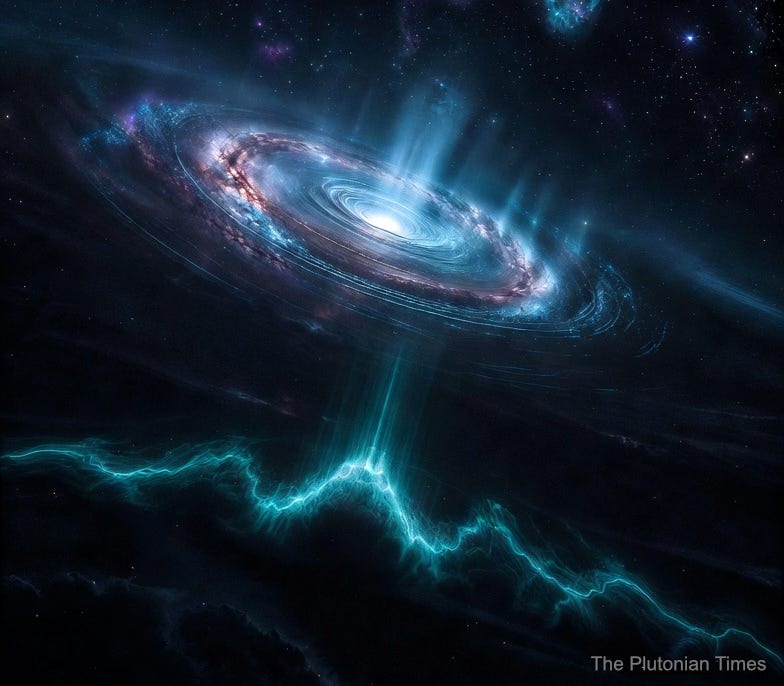
In the vast expanse of the universe, something extraordinary is happening roughly 457 million light-years away in the constellation Cassiopeia. A powerful radio signal erupts from a distant galaxy on a precise, repeating schedule, like a cosmic lighthouse with an unusually reliable timer. For about four days, it fires bursts of radio waves once or twice per hour. Then, for the next twelve days, silence. The entire pattern resets every 16.35 days.
This is FRB 180916.J0158+65 (also known as FRB 20180916B or simply “the 16-day repeater”), the first fast radio burst (FRB) ever discovered with a clear, regular periodicity. Since its initial detection in 2018, it has continued to puzzle and intrigue astronomers, offering rare clues about one of the most energetic and enigmatic phenomena in astrophysics.
What Are Fast Radio Bursts?
Fast radio bursts are brief, intense pulses of radio waves that last only a few milliseconds but release as much energy in that short time as the Sun does in several days or even years. Most FRBs appear once and are never seen again, making them extremely difficult to study in detail. Their origins remain one of modern astronomy’s biggest mysteries. Possible candidates include highly magnetized neutron stars (magnetars), merging compact objects, or even more exotic mechanisms.
A small fraction of FRBs are “repeaters,” sources that produce multiple bursts over time. Among these, FRB 180916.J0158+65 stands out as the first with a predictable cycle, turning it into a natural laboratory for scientists.
Discovery and Confirmation
The story begins with the Canadian Hydrogen Intensity Mapping Experiment (CHIME) radio telescope in British Columbia, Canada. On September 16, 2018, CHIME detected the first burst from this source, hence its designation.
By late 2019 and early 2020, after monitoring the object for hundreds of days and recording dozens of bursts, the CHIME/FRB Collaboration announced something remarkable: the bursts were not random. They clustered within an active phase lasting roughly plus or minus 2.7 days around a peak every 16.35 plus or minus 0.18 days. Outside this window, the source goes quiet for about 12 days before the cycle repeats.
In January 2020, a team using the European VLBI Network and the Gemini North telescope precisely localized the bursts to a star-forming region in a massive spiral galaxy called SDSS J015800.28+654253.0, at a redshift of z approximately 0.0337 (about 149 megaparsecs or 457 to 486 million light-years away, depending on cosmological parameters). This made it only the second repeating FRB to be accurately pinned to its host galaxy, and by far the closest known extragalactic FRB at the time.
What We’ve Learned from Years of Observations
Follow-up campaigns with telescopes worldwide have painted a detailed picture:
Low-frequency detections: Bursts have been observed down to 300 MHz with the Green Bank Telescope and even 328 MHz with the Sardinia Radio Telescope. Some studies pushed as low as 120 MHz, revealing that the emission is chromatic (frequency-dependent) and often band-limited, with individual bursts sometimes as narrow as approximately 40 MHz in bandwidth. No consistent detections below approximately 110 to 190 MHz have been reported in key campaigns.
No high-energy counterparts: Simultaneous or near-simultaneous observations with X-ray (Chandra, XMM-Newton, Insight-HXMT), optical, and UV telescopes during active phases have come up empty. Upper limits rule out bright flares or persistent emission at levels seen in galactic magnetar outbursts. Deep optical searches within seconds of radio bursts also found no transient light.
Tiny emitting region: High-time-resolution studies suggest the source of the radio emission is extremely compact, on the scale of about 1 kilometer, consistent with a neutron star.
Environment insights: The host galaxy is a Milky Way-like spiral, unlike the dwarf galaxy hosting the famous repeater FRB 121102. Hubble and ground-based spectroscopy show the FRB sits in a relatively quiet spot within a star-forming region, about 250 parsecs (projected) from the nearest young stellar clump. This distance and the lack of intense local star formation constrain possible progenitor scenarios.
As of early 2026, the CHIME catalog continues to track the source, with bursts still appearing on schedule during active windows (though public real-time listings may show periods of zero reported bursts depending on observation cadence).
Leading Theories: A Neutron Star in a Binary Dance?
The strict 16.35-day periodicity is the strongest clue. It strongly points to orbital motion or precession in a binary system involving a highly magnetized neutron star (magnetar):
The radio beam could be periodically pointed toward Earth due to the orbit of a companion star or black hole.
Winds from a massive companion might modulate the emission or absorption.
Alternative models include a precessing, flaring magnetar or a triaxial pulsar whose spin axis wobbles.
The location in a star-forming region supports a relatively young neutron star origin. Importantly, the periodicity and environment differ from other repeaters, suggesting FRBs may arise from multiple mechanisms or evolutionary stages.
What about aliens? As with many unusual astronomical signals, the possibility of an artificial origin (technosignature) has been briefly considered, and quickly dismissed. The bursts are broadband, noisy radio emission with natural characteristics, no signs of encoding or artificial structure, and they originate deep within a distant galaxy’s interstellar medium. Natural astrophysical engines remain the overwhelmingly favored explanation.
Why This FRB Matters
FRB 180916.J0158+65 is a game-changer because its predictability allows targeted multi-wavelength campaigns that would be impossible for one-off bursts. It demonstrates that at least some repeating FRBs can live in diverse galactic environments and exhibit wide ranges in luminosity and behavior.
It also highlights how much we still do not know. Despite years of intensive study, including low-frequency radio, X-ray, optical, and infrared follow-ups, no single model has been definitively confirmed. Every new observation adds constraints, ruling out some ideas while refining others.
The universe is full of these mysterious flashes. With next-generation telescopes and continued monitoring of known repeaters like this one, astronomers are closing in on the answers. What powers these cosmic clocks? How do they fit into the broader story of stellar death and compact objects?
For now, FRB 180916.J0158+65 keeps ticking away on its 16-day rhythm, patiently waiting for the next breakthrough.
Key References and Further Reading:
Marcote et al. (2020), Nature: Precise localization to the host galaxy. DOI: 10.1038/s41586-019-1866-z (arXiv:2001.02222)
CHIME/FRB Collaboration (2020), Astrophysical Journal Letters: Discovery of the 16.35-day periodicity.
Pastor-Marazuela et al. (2021), Nature: Chromatic activity down to 120 MHz.
Tendulkar et al. (2021), Astrophysical Journal Letters: Detailed study of the 60 pc environment with Hubble.
Wikipedia page on FRB 180916.J0158+65 (well-referenced overview).
CHIME/FRB public repeater catalog: chime-frb.ca