
All The Fish Are Dead: How Drought and Bureaucracy Killed an Entire Arizona Lake Ecosystem
ENVIRONMENT
Debbie Edwards
6/10/20262 min read
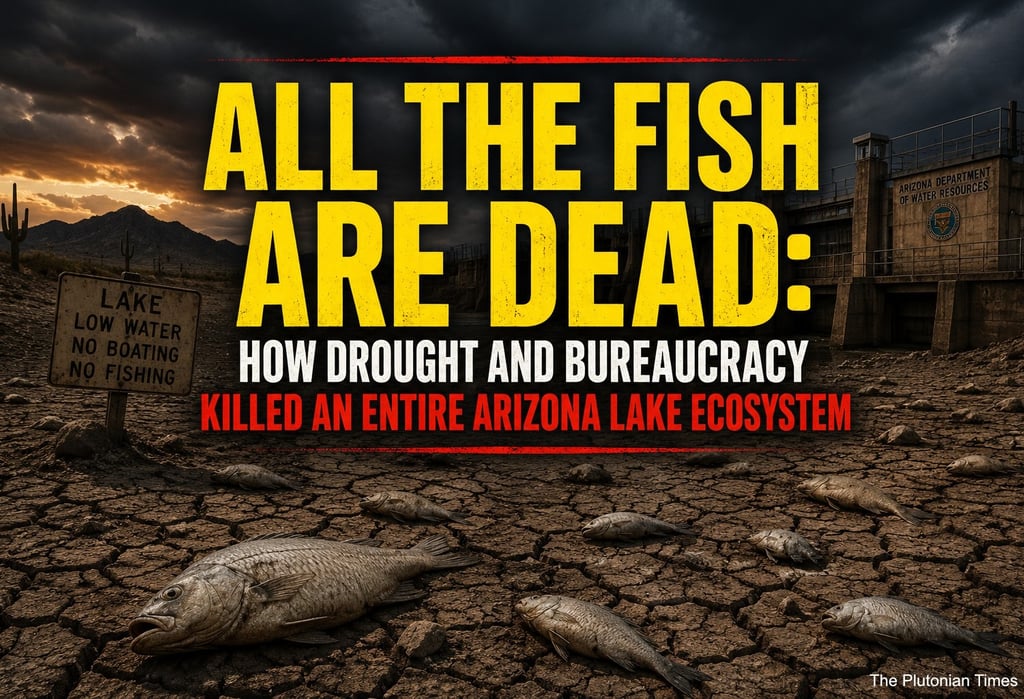
San Carlos Lake, one of Arizona's premier fishing destinations, has suffered a catastrophic loss. Officials report that approximately 100 percent of its fish population has died in a major fish kill event. The lake, located on the San Carlos Apache Indian Reservation east of Phoenix, is now closed indefinitely.
The San Carlos Recreation and Wildlife Department announced the closure on June 5, 2026. Severe drought conditions combined with mandatory water releases from Coolidge Dam drained the reservoir to critically low levels. This left millions of fish trapped in shallow, stagnant pools with depleted oxygen. Algal blooms further worsened the situation by consuming oxygen, especially at night and during decomposition.
San Carlos Lake has a long history as a productive fishery. It supported thriving populations of largemouth bass, flathead catfish, black crappie, bluegill, and other species. These included lineages tied to state records, such as the black crappie record of 4 pounds 10 ounces caught at the lake in 1959 by John Shadrik of Mammoth. The reservoir has produced trophy-class fish, including largemouth bass over 10 pounds and notable flathead catfish.
Water levels had already reached alarming lows earlier in 2026. In April, the lake stood at roughly 2 percent of capacity when releases occurred into the Gila River on April 22 to meet downstream agricultural demands in areas like Coolidge and Florence. By early June, the combination of ongoing drought and these releases triggered the complete ecosystem collapse.
Decomposing fish carcasses now blanket the shoreline and pose significant health and safety risks. Authorities have banned all fishing, harvesting, possession of fish, and related shoreline recreation until further notice. No timeline has been set for restocking or reopening.
This event echoes past crises at San Carlos Lake. The reservoir, created by Coolidge Dam and completed in 1928, has experienced near-empty conditions about 20 times in its history due to water allocation priorities for irrigation. A similar major die-off occurred in 2018 when levels dropped below 1 percent capacity. In the severe drought of 1976-1977, an estimated 5 million fish perished, requiring years for recovery.
The San Carlos Recreation and Wildlife Department continues to monitor water quality. They advise the public to respect the closure and avoid the area. For inquiries, contact the department at (928) 475-2343.
This tragedy highlights the vulnerability of desert reservoirs in the face of prolonged drought and competing water demands. Anglers and residents who valued San Carlos Lake as a recreational resource now face an uncertain future for its recovery.
References
San Carlos Recreation and Wildlife Department announcement via Facebook, June 5, 2026.
Gila Herald, "San Carlos Lake Closed Indefinitely Following Catastrophic '100% Fish Kill'", June 8, 2026.
Arizona Republic / azcentral, "'Major fish kill' closes San Carlos Lake amid drought, water releases", June 5, 2026.
Arizona Game and Fish Department state fish records.
Historical water level data and reports from USGS and local media, April-June 2026.