
AI Can Steal Your Fingerprint From a Single Selfie And You Won’t Believe How
TECHNOLOGY
Debbie Edwards
5/27/20262 min read
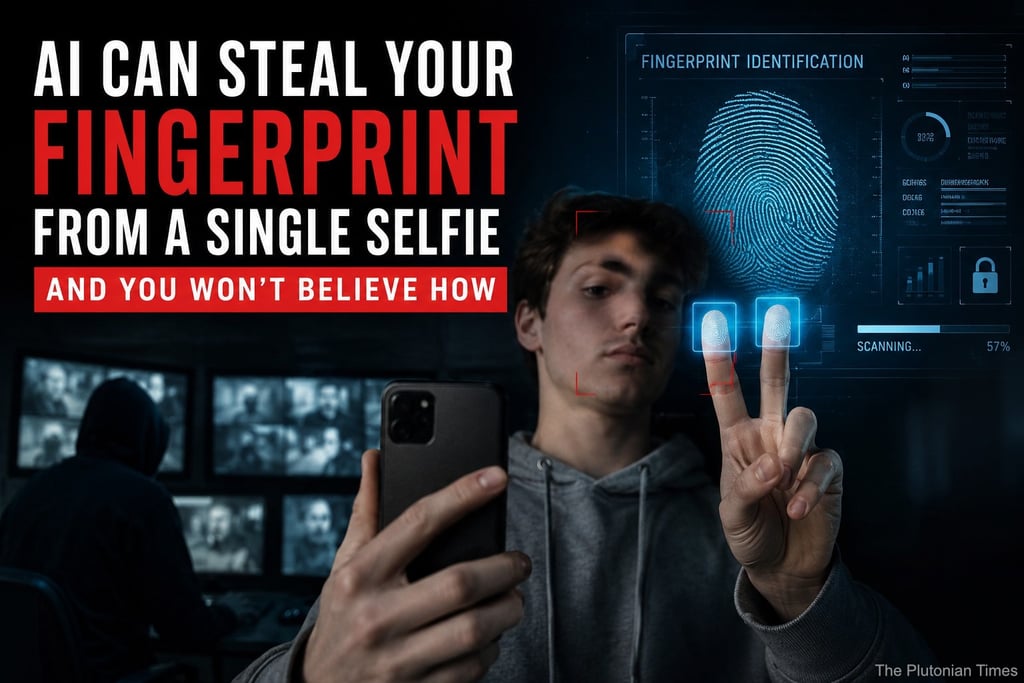
Artificial intelligence can now reconstruct detailed fingerprint patterns from ordinary photographs of people holding up their fingers. High resolution smartphone cameras capture enough ridge details in common poses like peace signs or thumbs up. Advanced AI then enhances and analyzes these images to create usable biometric data. A simple social media post could now compromise your fingerprints.
Modern phone cameras record fine skin textures when fingers face the lens directly from up to five feet away. In good lighting the unique ridges become visible. AI algorithms trained on fingerprint datasets enhance blurry areas isolate key minutiae points and generate digital prints capable of spoofing phones laptops and security systems.
Real World Demonstration
Chinese security expert Li Chang demonstrated this on television using a public celebrity peace sign photo. With AI sharpening tools he extracted matching fingerprint details. Similar techniques have been used by police enhancing hand photos and researchers recreating prints from several meters away.
Personal Security Implications
The implications for personal security are significant. Unlike passwords or PINs fingerprints cannot be reset once compromised. If attackers obtain a clear enough photo they could create physical spoofs using materials like silicone or glue or feed digital versions directly into systems that accept image based authentication. This threatens mobile banking apps device unlocking contactless payments and even border control processes that rely on fingerprint scans.
Organizations managing sensitive data may need to reassess reliance on fingerprints alone and invest in liveness detection to distinguish real fingers from spoofs. On the positive side this awareness might drive innovation in privacy preserving photography tools such as automatic fingerprint blurring in shared images or camera apps that obscure biometric details.
Impact on Law Enforcement and Ethics
Law enforcement and forensic fields also face changes. While this technology could aid investigations by matching partial prints from public photos it raises ethical questions about mass surveillance and consent. Citizens might unknowingly provide their own biometric keys through innocent posts leading to unintended tracking or identity theft. The permanence of fingerprints means one high quality image could have lifelong consequences unlike temporary data breaches.
To mitigate these risks experts recommend practical steps. Avoid poses that prominently display fingertips toward the camera especially in high resolution close ups. Review and edit existing photos to blur or crop hand details before sharing. Use gloves or creative angles in group shots and consider disabling fingerprint authentication on high value accounts in favor of stronger alternatives. As AI tools become more sophisticated and accessible vigilance in photo sharing habits grows increasingly important.
Technology that makes life more convenient and connected also exposes vulnerabilities in systems once considered robust. As AI continues to advance understanding these capabilities empowers users to protect what remains uniquely theirs.
References
May 2026 coverage of Li Chang demonstration on Chinese television variety show using celebrity peace sign photo for fingerprint reconstruction.
TechSpot article from May 16 2026 detailing AI potential to steal fingerprints from high resolution selfies with conditions of distance lighting and camera quality.
2018 UK police case enhancing fingerprint from mobile phone photo of hand holding items and Japanese National Institute of Informatics research on recreating prints from photos.
Kraken Security Labs 2021 demonstration of fingerprint spoofing from photographs using basic tools like Photoshop and glue.