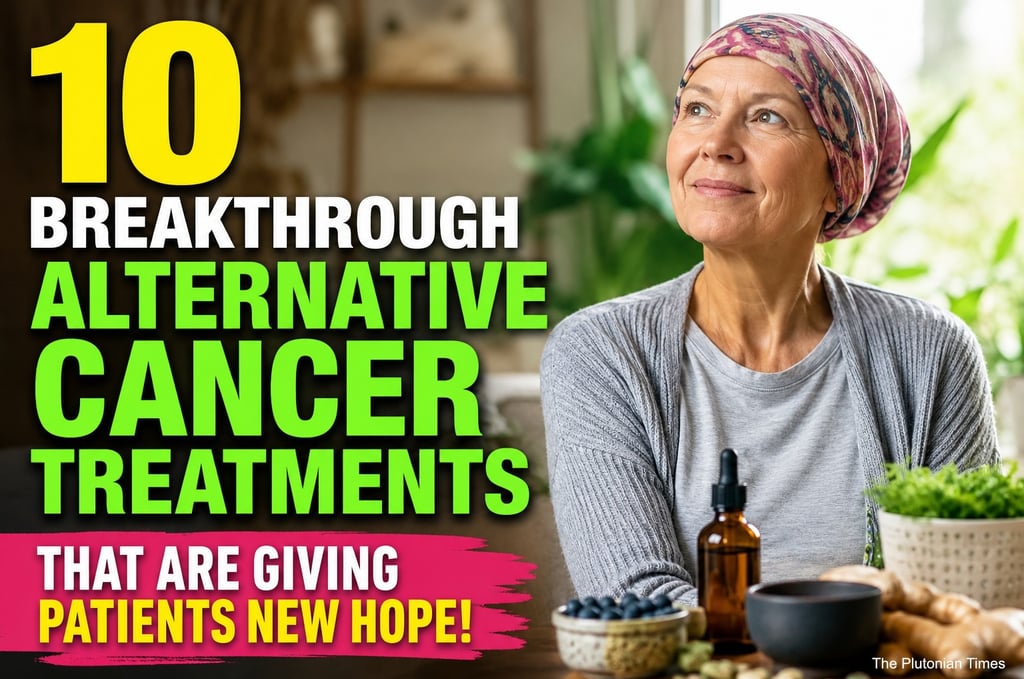
10 Breakthrough Alternative Cancer Treatments That Are Giving Patients New Hope!
SCIENCEHEALTH
Debbie Edwards
5/29/20264 min read
Important Disclaimer: This article discusses alternative and experimental approaches based on available research. None of these methods are proven cures for cancer. Conventional treatments like surgery, chemotherapy, radiation, and immunotherapy remain the standard of care. Always consult qualified oncologists before considering any therapy. Many of these options lack large-scale randomized controlled trials in humans, and self-treatment can be dangerous.
Cancer research continues to explore repurposed drugs, natural compounds, physical modalities, and lifestyle interventions as potential adjuncts or experimental options. Here are 10 with varying levels of preclinical or early clinical promise.
1. Ivermectin
Ivermectin, an antiparasitic drug, has shown antitumor effects in preclinical studies by inhibiting proliferation, metastasis, and angiogenesis while promoting cancer cell death across various types. It may reverse multidrug resistance and work at doses nontoxic to normal cells.
Early clinical trials explore its combination with immunotherapy for metastatic triple negative breast cancer. While promising in lab and animal models, human evidence is limited, and it is not FDA-approved for cancer. Observational data and ongoing studies warrant further research, but experts caution against unmonitored use.
2. Sound Healing and Focused Ultrasound (Histotripsy)
Sound-based therapies include music therapy for symptom relief and focused ultrasound like histotripsy for direct tumor destruction. Histotripsy uses sound waves to mechanically break down tumors, triggering immune responses that clear remaining cancer cells.
FDA-approved for liver tumors in October 2023, it achieved high technical success with minimal side effects in trials. In animal models, partial destruction led to immune clearance and no recurrence in over 80 percent of cases. Music and vibrational sound therapies may reduce anxiety, pain, and fatigue in cancer patients.
3. Leukotriene Inhibitors (e.g., Montelukast)
These asthma medications block inflammatory pathways implicated in cancer. Studies in veterans with asthma showed leukotriene inhibitor use linked to 17-22 percent reduced lung cancer risk. Higher cumulative doses correlated with lower overall cancer risk in some cohorts.
Preclinical data indicate suppression of tumor growth. They represent a low-cost repurposed option, though more dedicated cancer trials are needed.
4. Curcumin (from Turmeric)
Curcumin modulates pathways like NF-κB, Wnt/β-catenin, and PI3K/AKT, inhibiting growth, inducing apoptosis, and enhancing chemotherapy/radiation while reducing side effects.
Clinical trials show safety and potential benefits in colorectal, pancreatic, and breast cancers, with some tumor stabilization or regression. Bioavailability challenges exist, but formulations improve absorption. Evidence supports adjunct use, though not as standalone treatment.
5. Ketogenic Diet
This high-fat, low-carb diet aims to starve glucose-dependent cancer cells while protecting healthy ones. Animal studies show slowed tumor growth in pancreatic, colorectal, and brain cancers. Human trials report reduced fatigue, improved quality of life, and potential synergy with treatments.
Meta-analyses indicate benefits like lower insulin and fat mass, but results vary by cancer type, and cachexia risks require monitoring.
6. Hyperthermia Therapy
Controlled heating (to about 40-45°C) damages cancer cells, improves blood flow/oxygenation, and sensitizes tumors to radiation and chemotherapy. Used with standard therapies, it helps shrink tumors in sarcomas, rectal, and other cancers.
Clinical evidence supports better outcomes in recurrent or advanced cases. Newer nanoparticle and magnetic systems expand possibilities.
7. Metformin (Repurposed Diabetes Drug)
Metformin activates AMPK and disrupts cancer cell metabolism. Observational data link it to lower cancer incidence and better outcomes in diabetics. It shows promise in combination therapies for various cancers.
Mixed trial results exist for standalone efficacy, but its safety profile supports ongoing investigation as an adjunct.
8. High-Dose Vitamin D
Vitamin D influences cell differentiation, apoptosis, and immune function. Higher levels associate with lower risks of advanced cancers, particularly colorectal. Supplementation in trials reduced metastatic or fatal cancer incidence, especially in normal-weight individuals.
Benefits appear stronger for progression than initial prevention.
9. Personalized mRNA Cancer Vaccines
Building on COVID technology, these train the immune system against patient-specific tumor antigens. Early trials in pancreatic cancer showed strong T-cell responses and long-term survival benefits in responders.
Expanded trials target multiple cancers with promising remission data.
10. THC Cannabinoids
THC and cannabis-derived compounds have demonstrated potential anti-tumor effects in preclinical models by inducing apoptosis, inhibiting proliferation, reducing angiogenesis, and modulating immune responses in various cancers including breast, brain, and melanoma.
Early clinical data, such as in glioblastoma trials with THC:CBD combinations alongside temozolomide, have shown signals of improved survival and tumor stabilization in small cohorts. They are also widely studied for symptom management including pain, nausea, and appetite. Larger randomized trials are needed, as current evidence remains preliminary and not curative.
Conclusion: These approaches highlight innovation in repurposing, natural compounds, metabolic targeting, and physical energies. Promising preclinical and early clinical data exist, but rigorous evidence varies. Integrative oncology emphasizes combining evidence-based options safely under medical supervision. Ongoing trials will clarify roles. Focus on proven therapies while supporting research into these frontiers offers the best path forward.
References (selected from peer-reviewed literature and major institutions):
Ivermectin: ClinicalTrials.gov NCT05318469 (updated 2026); Anticancer Research, April 2026.
Histotripsy/Sound Healing: FDA approval for liver tumors (October 2023); HOPE4LIVER Trial results (PubMed, 2024-2025).
Leukotriene Inhibitors: Pulmonary Pharmacology & Therapeutics (2021); Frontiers in Oncology (2022).
Curcumin: Journal of Cancer Research and Therapeutics (2022); National Cancer Institute PDQ (updated May 2025).
Ketogenic Diet: Frontiers in Nutrition (2025); Nutrition journal (2024).
Hyperthermia Therapy: National Cancer Institute (updated May 2025); Critical Reviews in Oncology/Hematology (2024).
Metformin: Oncotarget (2016, with trials through 2025); multiple meta-analyses 2024-2025.
High-Dose Vitamin D: JAMA Network Open (2020); National Cancer Institute (updated 2023).
mRNA Vaccines: Pancreatic cancer trials (2023-2025 oncology publications).
THC Cannabinoids: PMC review (2024); Glioblastoma nabiximols trials (2023 reviews).
Always prioritize professional medical advice and consult primary studies for full details.